
Full Blood Count (FBC) Home Test Kit
Measure your general blood and immune health and ability to fight viral & bacterial infections

Full Blood Count (FBC) Home Test Kit
Finger-prick blood home test kit, clinic visit or home nurse visit

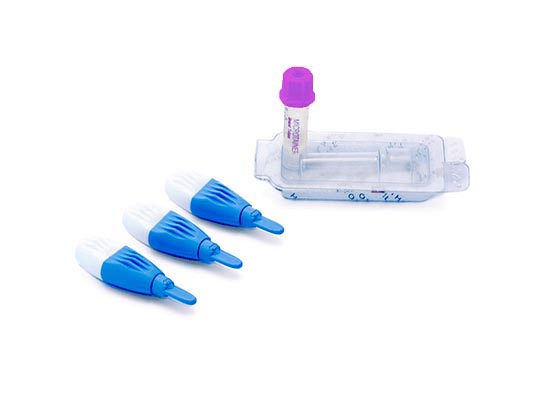
Collect your sample easily from home
Full Blood Count (FBC) Home Test Kit
Finger-prick blood home test kit, clinic visit or home nurse visit



Full Blood Count (FBC) Home Test Kit
Measure your general blood and immune health and ability to fight viral & bacterial infections
£79.00
Includes FREE delivery!
If you feel persistently tired, pick up infections more often than usual, or notice easy bruising, it is not always clear whether it is lifestyle, recovery, or something happening in your blood.
A Full Blood Count (FBC) measures the key cellular components of your blood, including red blood cells, white blood cells, and platelets. It can highlight patterns linked to anaemia, immune changes, or clotting abnormalities, and help point towards likely next steps.
If you want a clear, objective baseline for your blood health, an FBC is a sensible place to start.
How would you like to take your test?
How would you like to take your test?






What the Full Blood Count (FBC) test is for
Your blood is a working snapshot of how your body is coping day to day. When energy is low, infections are frequent, or bruising feels out of proportion, it can be hard to tell what is normal recovery and what needs a closer look. A Full Blood Count (FBC) is a foundational home blood test that measures the key cellular components of your blood, giving objective context for symptoms that otherwise stay vague.
This test looks at red blood cells, including haemoglobin and haematocrit, to assess oxygen-carrying capacity and patterns consistent with anaemia. It also examines the size and composition of red blood cells, which can help indicate whether anaemia may relate to iron deficiency or other nutritional factors such as vitamin B12 or folate. White blood cells are measured as a total and by type, which can highlight immune changes that may be seen with infection, inflammation, or recovery from illness. Platelets and related measures are included to assess clotting tendency and to help explain easy bruising or bleeding concerns.
Because the FBC is broad but specific, it is often used to establish a baseline and to guide sensible next steps. With Vitall, you can do testing from home using a home test kit, then use the results to decide whether reassurance is appropriate or whether it is worth discussing further investigation with your GP.
Small changes,
informed by
real data,
compound fast
Find out where to start...
What's included in your test?

Your test kit will contain the following sample types which the laboratory will use to test your sample:
The following sample guidance is required for this test, please follow carefully:
- One easy self-collection sample
- This test is sensitive to sample quality. Please pay extra care not to squeeze your finger too hard as this can result in burst red blood cells.
Get tested fast with a home test kit, using a finger-prick blood sample. Collect easily with no needles, with free priority postage to an accredited laboratory.
You can also opt for a clinic visit, for professional sample collection by experienced staff, in a comfortable & caring environment.
Biological age included
This panel covers enough blood markers to estimate your biological age - a research-based snapshot of how your body is ageing versus the calendar. After testing, you’ll see it in your results alongside your biomarkers.
This Full Blood Count (FBC) test measures the following biomarkers to measure your general blood and immune health and ability to fight viral & bacterial infections.

Specialist Tests
Need more details?
Learn how the self collection process works, what's in the kit, and your options for clinic and home nurses visits.
How this works ›Why take the Full Blood Count (FBC) test?
This test is best suited if you feel persistently tired or run down, have low energy, or notice paleness or reduced exercise tolerance and want to check for patterns consistent with anaemia.
It is also a sensible choice if you are picking up infections more often than usual, think you may have a viral or bacterial infection, or are recovering from illness and want objective insight into immune changes.
Consider it if you bruise easily, have had a recent injury, or want reassurance about clotting-related markers such as platelets.
It can be useful if you have had unexplained weight loss, live with conditions linked to inflammation or malnutrition such as coeliac disease or Crohn’s disease, have kidney disease, or have a history of smoking.
It is appropriate if you are taking medicines or substances that may affect overall health, including frequent use of painkillers such as paracetamol, ibuprofen or aspirin, or performance-enhancing drugs, and want a clear baseline for the general health of your blood.
- Are anorexic or bulimic or suffer from another eating disorder
- Are at risk from chronic inflammatory diseases
- Are taking medications that cause toxic liver disease, which includes too much paracetamol, ibuprofen & aspirin
- Are, or have been, a smoker
- Feel tired all the time with low energy
- Have Chrohn's disease (which can lead to malnutrition)
- Have Coeliac disease (which can cause malnutrition)
- Have had weight loss
- Have kidney disease
- Have recently experienced an acute injury
- Have symptoms of anemia (often including fatigue, paleness, difficulty exercising)
- Suffer from chronic fatigue & tiredness
- Suffer from urinary tract infections (UTIs)
- Take performance enhancing drugs, including steroids and creatine
- Think you may have a bacterial or viral infection
- Want to check the general health of your blood
- Want to understand & improve your general health
- Wish to assess whether you are suffering from anaemia
Order your Full Blood Count (FBC) test and get the insights you need to feel your best.
Medical disclaimer: This test provides health information and is not a substitute for clinical assessment, diagnosis or treatment. Results should be considered alongside your symptoms, medical history and any medicines you take. If you are concerned about your results or your health, speak to a qualified healthcare professional. For urgent concerns, contact NHS 111, your GP, or call 999 in an emergency.
Expert Analysis In An Accredited Laboratory
Once your sample reaches the UKAS-accredited lab, the magic begins. But this isn't simple science – we insist on state-of-the-art automated technology to ensure your results are processed with unmatched accuracy and efficiency.
- UKCA marked test kits for full regulatory compliance.
- IVDD certified diagnostics for total quality reassurance.
- Medically led UKAS accredited laboratory testing for accurate results.



Dr. Kate Bishop
Chief Scientific Officer
"All testing is conducted by healthcare professionals in a medically-led laboratory. Accredited lab testing is the best way to be confident that your test results are accurate. Get tested now for complete reassurance."
Delivery and results
The Full Blood Count (FBC) test offers a Finger-prick blood home test kit, clinic visit or home nurse visit for sample collection. Kits are posted to your home free of charge.
Easily sampling from home or at a clinic offers you the most convenient and stress-free way to get tested. Your test also includes free 24 hour tracked sample return to the laboratory.

1. Order Your Test

2. Post Your Samples

3. Get Your Results
Your haematocrit measures how much of your blood is made up of cells and is expressed as a percentage.
Nearly all of the cells in your blood are red blood cells (RBCs).
| Test | Result | Reference | Status |
|---|---|---|---|
| Haematocrit | 0.519L/L | 0.40 - 0.52 | Borderline High |
0.519 Your haematocrit measures how much of your blood is made up of cells and is expressed as a percentage. Nearly all of the cells in your blood are red blood cells (RBCs). | |||
| Red Cell Count | 6.0910^12/L | 4.4 - 6.5 | Normal |
| Mean Corpuscular Volume | 85.2fL | 80 - 100 | Normal |
| Mean Corpuscular Haemoglobin | 28.3pg | 27 - 32 | Normal |
| Red Cell Distribution Width | 14.1% | 11.5 - 15 | Normal |
| Platelet Count | 22210^9/L | 150 - 450 | Normal |
| Mean Platelet Volume | 10.4fL | 7 - 13 | Normal |
| White Cell Count | 8.410^9/L | 3 - 11 | Normal |
| Neutrophils | 51.7% 4.310^9/L | 2 - 7.5 | Normal |
| Lymphocytes | 37% 3.110^9/L | 1.5 - 4.5 | Normal |
| Monocytes | 5.1% 0.410^9/L | 0.2 - 0.8 | Normal |
| Eosinophils | 5.8% 0.510^9/L | 0 - 0.4 | High |
| Basophils | 0.4% 010^9/L | 0 - 0.1 | Borderline Low |
| Haemoglobin | 172g/L | 130 - 180 | Normal |
| Mean Corpuscular Haemoglobin Concentration | 332g/L | 320 - 360 | Normal |

Traffic Light System Instantly see which health markers are in a healthy range (green), borderline (yellow), or need attention (red).

Detailed Explanations Each marker includes an overview of its role in your body, what it means to have high or low levels, and actionable tips to improve.
Tracked Changes See how your health markers have changed over time, track your progress, and optimise your health.

Expert Guidance We don't just hand over data – we empower you with insights to make informed decisions about your health.
What happens after your results?

Testing shows where you are today. Prevent helps you focus on where you want to be.

Using your test results, metrics and symptoms, you can gain further insights to achieve your health goals.

Connect with expert medical partners focused on helping you achieve better health.

We are highly selective over who we choose to work with, so you can be confident you are in good hands.
What people say about this test

Ben
Hannah
Tom
Frequently Asked Questions
- Full Blood Count (FBC) [Internet]. Lab Test Online - The Association for Clinical Biochemistry & Laboratory Medicine. 2020 [cited 1 July 2021]. Available from: https://labtestsonline.org.uk/tests/full-blood-count-fbc
- George-Gay B, Parker K. Understanding the complete blood count with differential. Journal of PeriAnesthesia Nursing. 2003;18(2):96-117.
- Tefferi A, Hanson C, Inwards D. How to Interpret and Pursue an Abnormal Complete Blood Cell Count in Adults. Mayo Clinic Proceedings. 2005;80(7):923-936.
- Complete Blood Count (CBC): at a glance [Internet]. Health Awareness. 2021 [cited 1 July 2021]. Available from: https://www.healthawareness.co.uk/haematology/complete-blood-count-cbc-at-a-glance/#
- Blood Tests [Internet]. NHS Inform. 2021 [cited 1 July 2021]. Available from: https://www.nhsinform.scot/tests-and-treatments/blood-tests/blood-tests
- Ford J. Red blood cell morphology. International Journal of Laboratory Hematology. 2013;35(3):351-357.
- Higgins J. Red Blood Cell Population Dynamics. Clinics in Laboratory Medicine. 2015;35(1):43-57.
- Hoffman J. Red blood cells, compasses and snap shots. Blood Cells, Molecules, and Diseases. 2018;71:67-70.
- Luo J, Chen C, Li Q. White blood cell counting at point‐of‐care testing: A review. ELECTROPHORESIS. 2020;41(16-17):1450-1468.
- Lassila R. Platelet Function Tests in Bleeding Disorders. Seminars in Thrombosis and Hemostasis. 2016;42(03):185-190.
- Normal Lab Values [Internet]. Chronic Lymphocytic Leukemia. 2021 [cited 1 July 2021]. Available from: https://cllsociety.org/toolbox/normal-lab-values/
- Cascio M, DeLoughery T. Anemia. Medical Clinics of North America. 2017;101(2):263-284.
- Godon A, Genevieve F, Marteau-Tessier A, Zandecki M. Automated hematology analysers and spurious counts#$##x0000A;Part 3. Haemoglobin, red blood cells, cell count and indices, reticulocytes. Annales de biologie clinique. 2012;70(2):155-168.
- Cascio M, DeLoughery T. Anemia. Medical Clinics of North America. 2017;101(2):263-284.
- Viprakasit V, Ekwattanakit S. Clinical Classification, Screening and Diagnosis for Thalassemia. Hematology/Oncology Clinics of North America. 2018;32(2):193-211.
- Honda T, Uehara T, Matsumoto G, Arai S, Sugano M. Neutrophil left shift and white blood cell count as markers of bacterial infection. Clinica Chimica Acta. 2016;457:46-53.
- Chabot-Richards D, George T. White Blood Cell Counts. Clinics in Laboratory Medicine. 2015;35(1):11-24.
- Eicher J, Lettre G, Johnson A. The genetics of platelet count and volume in humans. Platelets. 2017;29(2):125-130.
- Smock K, Perkins S. Thrombocytopenia: an update. International Journal of Laboratory Hematology. 2014;36(3):269-278.
- Chabot-Richards D, George T. Leukocytosis. International Journal of Laboratory Hematology. 2014;36(3):279-288.
- Manciu S, Matei E, Trandafir B. Hereditary Spherocytosis - Diagnosis, Surgical Treatment and Outcomes. A Literature Review. Chirurgia. 2017;112(2):110.
- May J, Marques M, Reddy V, Gangaraju R. Three neglected numbers in the CBC: The RDW, MPV, and NRBC count. Cleveland Clinic Journal of Medicine. 2019;86(3):167-172.
- Gulati G, Song J, Florea A, Gong J. Purpose and Criteria for Blood Smear Scan, Blood Smear Examination, and Blood Smear Review. Annals of Laboratory Medicine. 2013;33(1):1-7.
- Haybar H, Pezeshki S, Saki N. Evaluation of complete blood count parameters in cardiovascular diseases: An early indicator of prognosis?. Experimental and Molecular Pathology. 2019;110:104267.
The normal ranges for a FBC blood test are the expected values of results that are seen in 95% of the healthy poplulation. So if you have results outside of this range it does not always mean you have an issue, but it does warrant further investigation. Note that normal ranges for full blood count tests differ between men and women, and can also vary between laboratories. The following should be used as a guide only - up to date values will always be returned as part of your full blood count home test report. [11]
Red Blood Cell Count:
Male: 4.7 to 6.1 million cells/mcL
Female: 4.2 to 5.4 million cells/mcL
Haemoglobin level:
Male: 13.8-17.2 g/dL
Female: 12.1-15.1 g/dL
Haematocrit:
Male: 40.7-50.3%
Female: 36.1-44.3%
Mean Cell Volume:
Male: 80-100 fL
Female: 80-100 fL
Mean Corpuscular Haemoglobin:
Male: 27-31 pg
Female: 27-31 pg
Mean Corpuscular Haemoglobin Concentration
Male: 32-36 g/dL
Female: 32-36 g/dL
Red Cell Distribution Width
Male: 11.8-15.6%
Female: 11.9-15.5%
Number of platelets:
Male: 150-450 x 109/L
Female: 150-450 x 109/L
White Blood Cell Count:
Male: 3.5-10.5 x 10⁹/L
Female: 3.5-10.5 x 10⁹/L
Percentage of Basophils:
0.5% to 1%
Percentage of Eosinophils:
1% to 4%
Percentage of Lymphocytes
20% to 40%
Percentage of Monocytes
2% to 8%
Percentage of Neutrophils
40% to 60%
A Full Blood Count home test can help identify a large number of conditions and diseases.
Anaemia is when your body is unable to normally produce red blood cells. The red blood cells may be too few, too many, too large, too small, too pale, have an abnormal shape or have a short life span. These abnormalities can be inherited or caused by drinking too much alcohol, an iron deficiency, a vitamin B12 and folate deficiency, by other conditions, or by medicines like penicillin and methyldopa. If anaemia is of concern to you, we offer a more complete anaemia test here, which also includes a full blood count home test.
Haemoglobinopathies are inherited diseases in which your haemoglobin is not produced properly and is unable to efficiently transport oxygen. Common types of haemoglobinopathies are sickle cell disease, thalassemia, and methemoglobinemia. Further, more specific testing is required to identfy these.
Variation in red blood cells, haemoglobin, and haematocrit levels may also indicate possible heart or lung disease. Polycythaemia vera is a condition in which your body produces too many red blood cells, white blood cells, and platelets.
Myelodysplastic syndrome and myelofibrosis are two types of cancer that are characterised by a low count of white blood cells in your bloodstream. Other types of disease can be caused by an overly low count of white cells, like neutropenia and agranulocytosis.
A low white cell count can also indicate an auto-immune disease, a case where your body’s immune system attacks itself. A FBC blood test is also extremely important because it can help you and your GP to detect malignant diseases at an early stage. The main 3 types of malignant disease are lymphomas, myelomas and leukaemia.
Myeloma happens when your body overly produces a specific type of white blood cell called plasma cells. Lymphomas occur when lymphocytes, a type of white blood cell, are being produced in excessive quantities by your body.
There are two types of lymphomas: Non-Hodgkin’s and Hodgkin’s lymphoma. These two variants affect different types of lymphocytes. Leukaemia is when your body abnormally produces lymphocytes or myeloid cells. Leukaemia can be chronic, with the white blood cells produced building up over time, or acute, with your body suddenly speeding the production of white blood cells. Myeloma, lymphoma, and leukaemia are serious diseases, and regular FBC testing can help you detect them at an early stage and make the treatment more straightforward.
An important number of clotting diseases can also be identified through the platelet count in FBC blood tests.
Generally speaking, while a full blood count home test may not identify the exact cause of an issue, it is an excellent indicator of health concerns and helps to define further investigations. [19][20][21][22][23][24][25]
If your red blood cell count, haemoglobin, and/or haematocrit are too low, it could be that you have anaemia, a condition in which your body does not produce enough red blood cells that can transport oxygen and carbon dioxide. This deficiency can be due to your body not having enough iron, producing ineffective red blood cells, not producing enough red blood cells, or destroying a portion of your red blood cells.
If your FBC blood test results show that your red blood cell count, haemoglobin, or haematocrit are too high, this could be because you are dehydrated or take certain medication like diuretics.
Another reason could be that your body is producing too many red blood cells because you have a heart or lung condition that is causing your oxygen levels to be too low. The MCV, MCHC, and RDW results can help your GP determine what type of anaemia you might have.
Note that if anaemia is a concern, we also offer a more comprehensive anaemia home test which includes a FBC blood test.
A high white blood cell count (leucocytosis) could indicate that your body is trying to protect itself through an inflammatory response against an infection or other types of disease. The white cell differential (count of basophils, eosinophils, lymphocytes, monocytes, and neutrophils) can provide more information that can help you and your GP accurately understand and diagnose the cause of any white blood cell variations. A low white blood count (leukopenia) can mean that your bodies’ immune defence system is not working optimally. Leukopenia can also be caused by certain medications you take.
A low platelet count (thrombocytopenia) can potentially cause bleeding problems and might be caused by treatments you are undergoing.
The Mean Platelet Volume (MPV) provides valuable information in identifying the cause of your low platelet count. A high platelet count (thrombocytosis), on the other hand, can be an indication of an ongoing inflammation process.
Overall, a Full Blood Count home test can give you an overview of your health at a given moment in time, helps your GP diagnose a certain condition, and also help monitor the progression of a disease or the effects of a treatment. Given the complexity of results, your FBC blood test report will include a detailed explanation for each test result. [12][13][14][15][16][17][18]
The Vitall full blood count home test measures many different biomarkers in your blood to give a comprehensive overview of your blood health. These are summarised as follows:
Red Blood Cells
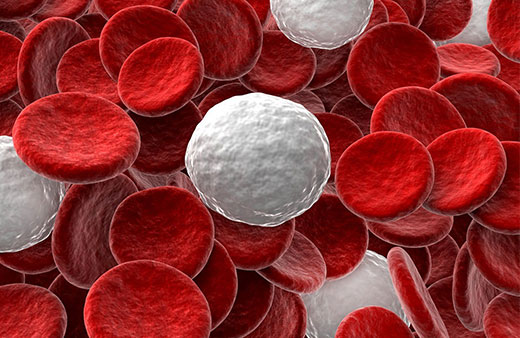
Red blood cells, also known as erythrocytes, have a characteristic oval biconcave disk shape. They play a very important role in keeping your muscles and organs healthy and functional. We all breathe-in oxygen and breathe-out carbon dioxide, this is thanks to the red blood cells transporting carbon dioxide to the lungs and exchanging it with oxygen to it bring back to the bloodstream in order to supply our tissues for respiration and to carry out their functions.
The red blood cells are able to transport both carbon dioxide and oxygen thanks to an iron-containing protein called haemoglobin. Each red blood cell contains millions of haemoglobin proteins. The shape and number of red blood cells in your bloodstream as well as the number of haemoglobin molecules in each cell are very important indicators of several medical conditions. A Full Blood Count home test measures many different indicators related to red blood cells and haemoglobin.
The Red Cell Count is the amount of red cells in a given volume of your blood.
The Mean Cell Volume (MCV) measures the average size of your red blood cells. The Red Cell Distribution Width (RCDW) measures the variation of the volume of your red blood cells. Another indicator of the health of your red blood cells is the haematocrit (HCT) – also known as Packed Cell Volume (PCV) – which measures the percentage of your blood that is made up of red blood cells.
The amount of haemoglobin in a given volume of your blood is also measured, this indicator is simply called haemoglobin. Two other important haemoglobin indicators measured in yur FBC blood test are the Mean Corpuscular Haemoglobin (MCH) and the Mean Corpuscular Haemoglobin Concentration (MCHC), they both measure the average amount of Haemoglobin you have in a red blood cell; the only difference is that MCHC also takes into account the average proportion of the red blood cells that contain haemoglobin in terms of size. [6][7][8]
White Blood Cells
Your White Blood Cells protect your body from infections. They also take part in your body’s inflammatory responses. The White Blood Cell Count measures the amount of white blood cells in your blood. When the White Blood Cell Count is too high, it is called leucocytosis. On the other hand, when it is too low, it is called leukopenia.
In what we call the white blood cell differential, the different types of your white blood cells are also identified and counted as part of a FBC blood test; they are called basophils, eosinophils, lymphocytes, monocytes, and neutrophils. [9]
Platelets
Platelets – also called thrombocytes – are cell fragments in your bloodstream that are responsible for clotting. The Platelet Count measures the average amount of platelets in your bloodstream. If the amount of platelets is too low, it is called thrombocytopenia. On the other hand, if it is too high, it is called thrombocytosis.
Another important indicator, the Mean Platelet Volume (MPV), measures the average size of your platelets. [10]
As you can see a FBC blood test can be very detailed. Fortunately, like all of our home blood tests, each result is clearly explained in your report.
A Full Blood Count (FBC) – also known as Complete Blood Count (CBC) – is a blood test that measures the number and size of cells in your bloodstream.
It is a very common blood test that can give you an overview of the state of your health. Vitall are one of a select number of companies able to offer a full blood count home test [1][2]
Full Blood Count blood tests are widely used because they provide important information about your health. The Full Blood Count test can give you a snapshot of your overall health as part of an annual check-up. Even if you do not experience any symptoms or anything out of the ordinary, getting tested regularly can be a good way of detecting any changes in your body at an early stage. [3]
If you start to experience symptoms that might seem benign like fatigue, weakness, fever, inflammation, or bleeding, a FBC blood test can reveal if you might have a medical issue. You should discuss the test results with your GP.
Full Blood Count tests can also help you and your GP monitor your health if you have been diagnosed with a condition that affects your blood cells. Medication can affect different organs, with most of them having an impact on the cells in your bloodstream. This is why Full Blood Count home tests can also monitor the effects of some medications, both positive and negative. Some medications require that you monitor the health of certain organs by Full Blood Count testing on a monthly basis or even more frequently. [4][5]
Biological age included
This panel covers enough blood markers to estimate your biological age - a research-based snapshot of how your body is ageing versus the calendar. After testing, you’ll see it in your results alongside your biomarkers.
This Full Blood Count (FBC) test measures the following biomarkers to measure your general blood and immune health and ability to fight viral & bacterial infections.
Specialist Tests
Home test kits contain full instructions and everything you need to safely collect and return your sample. Please see the following details relating to this test below:
- One easy self-collection sample
- This test is sensitive to sample quality. Please pay extra care not to squeeze your finger too hard as this can result in burst red blood cells.
We also have a guide on how to collect a high quality sample which you may find useful.
The Vitall Full Blood Count (FBC) test is available online for just £79.00. Your home test kit will be dispatched by free first class post for delivery to your door.
For the best value testing you can also upgrade this Full Blood Count (FBC) home test to tests which also measure other biomarkers, including:
- Anaemia - Find out if low iron or B vitamins could be behind your tiredness, breathlessness, or paleness, and get clear next steps..
- Arthritis (Rheumatoid Factor) - Check for rheumatoid factor and inflammation.
- Male Total Health Check - Test your whole body as a system to understand and master your health. This all in one health test targets male lifestyle risks to put you in control..
- Female Total Health Check - Take a whole body holistic view of female health risks. This all round health test provides the reassurance needed for a healthier you!.
When you checkout to buy your Full Blood Count (FBC) test online we also offer additional options, including:
- Visit the Patient Reception in central London for just £35. Your Full Blood Count (FBC) test sample can be collected by a qualified nurse for immediate analysis.
- Have a nurse visit you to collect the sample for your Full Blood Count (FBC) test, this is nationwide for just £79.
Whichever option you choose at checkout, buying the best Full Blood Count (FBC) test online in the UK with Vitall ensures high quality results from an accredited laboratory.
Take control of your health today with one of Vitall’s home blood tests.
Upgrades For The Full Blood Count (FBC) Test








Articles About Full Blood Count (FBC) Testing
View all articles ›Longevity for Women in Their 40s: The Biomarkers That Matter Most
Why Biomarker-Led Care Is Becoming the Cornerstone of Future Health Systems
From Taboo to Trend: The Rise of Injectable Peptides, Steroids and ‘Optimisation’
Bridging The Gap Between Illness and Optimisation
Why Wearables Only Tell Part of Your Health Story - And What’s Missing
You’ve Had a Baby. Now Let’s Talk About What No One Told You (But Your Blood Will)
Nutritional Synergy: How to Hack Your Meals Like a Pro
10 Health Myths You Need To Stop Believing (And What to Do Instead)
NHS Blood Test for Inherited Disorders Rolls Out, Aiming to Minimize Transfusion Side-Effects
Clinical review

Dr. Shahzaib Ahmad MBBS, BSc, MRCP, FRCA, FFICM
Clinical Supervisor - Vitall|GMC 7495062|Profile
Reviewed on 05/08/2026
Next review due 05/08/2027
Review focus: Blood biomarkers, laboratory testing methodology, and biochemical interpretation.
£79.00
