Take Control Of Your Health | Home Blood Testing Services
Review 4.8 / 55 Stars! Private STI Tests &ampl; Health Checks Online Reviews
Login ›Basket (0)
Basket (0)
Find Your Test
Womens
Mens
All Tests
Conditions
Help
Take This Test ›All Biomarkers ›

Red Cell Count Testing (RBC)

The Red Cell Count test is also known as a Red Blood Cell Count, RBC Count test.

All you need to know about testing Red Cell Count levels with a laboratory test

  • What is the Red Cell Count test for?
  • How to test Red Cell Count?
  • What if Red Cell Count results are high?
  • What if Red Cell Count results are low?
  • Who should take the Full Blood Count (FBC) Blood test?
  • What causes a high RBC?
  • What is a RBC blood test?
  • What is a red blood cell count used for?
  • When should I take a RBC blood test?
  • What is the process for an RBC blood test?
  • What is a normal red blood cell count?
  • What is considered a high red blood cell count?
  • What does a high RBC mean?
  • How can I decrease my red blood cell count? 
  • What causes a low RBC?
  • What is considered a low red blood cell count?
  • What does a low RBC mean?
  • How can I increase my red blood cell count?
  • Citations

Red Cell Count Testing UK Statistics 2026

Icon For Red Cell Count
Human female body
Human male body
Human female body
Human male body
Human female body
Human male body
Human female body
Human male body
Human female body
Human male body
Human female body
Human male body
Human female body
Human male body
Human female body
Human male body
Human female body
Human male body
Human female body
Human male body
Human female body
Human male body
Human female body
Human male body
Human female body
Human male body
Human female body
Human male body
Human female body
Human male body
Human female body
Human male body
Human female body
Human male body
Human female body
Human male body
Human female body
Human male body
Human female body
Human male body
Human female body
Human male body
Human female body
Human male body
Human female body
Human male body
Human female body
Human male body
Human female body
Human male body
Human female body
Human male body
Human female body
Human male body
Human female body
Human male body
Human female body
Human male body
Human female body
Human male body
Human female body
Human male body
Human female body
Human male body
Human female body
Human male body
Human female body
Human male body
Human female body
Human male body
Human female body
Human male body
Human female body
Human male body
Human female body
Human male body
Human female body
Human male body
Human female body
Human male body
Human female body
Human male body
Human female body
Human male body
Human female body
Human male body
Human female body
Human male body
Human female body
Human male body
Human female body
Human male body
Human female body
Human male body
Human female body
Human male body
Human female body
Human male body
Human female body
Human male body

6.7% of people tested have Red Cell Count levels which are too high.

And 6.5% have levels that are too low.

4.8

Low
< 4.40

Normal
4.40 - 5.80

High
5.80 +

The average Red Cell Count result is 4.8 x10^12/L
Note what is normal for you may differ for your age and sex.

Are you in the 86.8% with normal results?
Get Tested ›

What Is The Red Cell Count Test For?

Your red blood cell count quantifies the number of red blood cells in your blood.

Red blood cells are responsible for carrying oxygen from the lungs and distributing it to the tissues and organs throughout your body.

How To Test Red Cell Count

By buying a laboratory test kit with professional nurse or clinic collection, you can accurately measure Red Cell Count for total reassurance.

Professional analysis in an accredited laboratory ensures rapid result delivery.

The Vitall Full Blood Count (FBC) nurse or clinic test kit includes a Red Cell Count test and is available for just £79.00.

Tests which include a Red Cell Count test:

Health is in your hands
Take Control Of Your Health | Home Blood Testing Services

Full Blood Count (FBC) Test Kit

Full Blood Count (FBC) test kit
Full Blood Count (FBC) Home Test Kit UK

Full Blood Count (FBC) Test Kit

Measure your general blood and immune health and ability to fight viral & bacterial infections

£79.00

View Full Details ›
Health is in your hands
Take Control Of Your Health | Home Blood Testing Services

Immune Health Test Kit

Immune Health test kit
Immune Health Home Test Kit UK

Immune Health Test Kit

Measure your immune system health and ability to fight viral & bacterial infection

£79.00

View Full Details ›

What if Red Cell Count Results Are High?

A high RBC (red blood cell) count is often associated with dehydration. It can also be linked to bone marrow overproduction or other more severe conditions that may be treated.

This finding is often followed up with a repeat test. If levels remain elevated, the underlying cause is commonly investigated further so that appropriate treatment can be considered.

This result is usually interpreted alongside other measurements in the full blood count.

What if Red Cell Count Results Are Low?

Low RBC (red blood cell) count can be linked to a wide range of causes, including anaemia, bleeding, kidney disease, bone marrow failure, malnutrition, or nutritional deficiencies of iron, folate, and vitamin B12.

A low red blood cell count is commonly reviewed further to clarify the underlying cause.

Management may include vitamin or mineral supplementation, changes in nutrition, or replacement with red blood cells from a blood donor.

This result is often interpreted alongside other measurements included in the full blood count.

Who Should Take This Test?

Measure your Red Cell Count levels and measure your general blood and immune health and ability to fight viral & bacterial infections with a Full Blood Count (FBC) nurse or clinic finger-prick bloodtest kit

You get the convenient testing with the reassurance of professional clinical analysis. Your results are delivered quickly & securely online.

This Full Blood Count (FBC) Test is advised if you:

  • want the convenience of home testing without waiting for a GP appointment;
  • need a high quality, clinically accredited test done in a professional clinical laboratory.

What causes a high RBC?

If an RBC blood test shows high RBC counts (erythrocytosis) can be caused by many diseases and, thus, present varied clinical symptoms. The clinical features most commonly associated with erythrocytosis are the following:[7]

  • Reddened skin.
  • High blood pressure, especially high diastolic pressure (bottom blood pressure number).
  • Blurred vision.
  • Headaches.
  • Itchy skin.
  • Easy bruising.
  • Nosebleeds.
  • Confusion.

The causes of erythrocytosis can be classified into two groups: primary and secondary.

Primary erythrocytosis is characterised by the autonomous and uncontrolled production of RBCs. It is associated with a rare type of blood cancer called polycythaemia vera.[9]

Secondary erythrocytosis is caused by an expected body response against a disease which results in increased RBC production. This response is usually associated with high levels of erythropoietin, a hormone that regulates RBCs.[9] This type of erythrocytosis is caused by:[6][9]

  • Low oxygen levels.
    • Smoking.
    • Carbon monoxide (CO) poisoning.
    • Lung and cardiac disease.
    • Congenital heart diseases.
    • Sleep apnoea.
    • Living at high altitudes.
  • Low oxygen supply to the kidneys.
    • Renal artery stenosis.
    • Hydronephrosis.
    • Polycystic kidney disease.
  • Certain medications (diuretics, testosterone, erythropoietin).
  • Certain tumours and cancers that increase erythropoietin levels.

In some situations, a high RBC count in a test is not necessarily caused by the increased production of RBCs in the body. This is called ‘relative erythrocytosis’ because RBCs do not increase; instead, they become more concentrated due to decreased plasma.

This phenomenon can be seen in conditions that decrease plasma volume, which is the fluid part of the blood. Dehydration is a very common cause that doctors have to examine every time someone presents erythrocytosis in an RBC count or FBC.[9]

What is a RBC blood test?

A red blood cell (RBC) count measured as part of a full blood count test is a simple blood test that determines the number of RBCs in your blood. An RBC test should not be confused with haematocrit, which represents how much space in the blood is occupied by RBCs.[1]

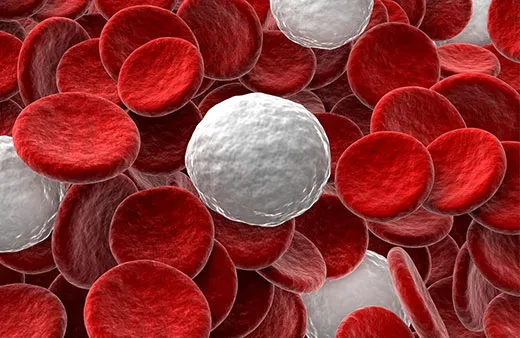
RBCs, also known as erythrocytes, are disc-shaped cells made in the bone marrow; they are the most abundant cells in the blood. Unlike most cells, mature RBCs do not have a nucleus.[2] They contain haemoglobin, which carries oxygen and gives them their characteristic red colour.[1][2] Under normal circumstances, these small cells can survive in the blood for 120 days.[3]

There are two main tasks that RBCs must fulfil: transporting inhaled oxygen from the lungs to other tissues and carrying carbon dioxide (CO2) from these tissues to the lungs for exhalation.[3]

What is a red blood cell count used for?

A RBC blood test is useful during the screening, diagnosis, and monitoring of multiple conditions.

Normal RBC counts do not necessarily mean you are free from disease. Similarly, abnormal RBC counts do not unavoidably translate into a severe condition.[4] It is essential to consider your symptoms and other exams to fully assess any condition. For this very reason, this test is frequently included in a full blood count (FBC).

A low RBC count is called anaemia, a common condition that may affect anyone and is associated with various diseases.[5]

A high RBC count is known as erythrocytosis or polycythaemia. While not as common as anaemia, erythrocytosis increases your risk of blood clot formation; this may result in life-threatening conditions, such as pulmonary embolism.[6]

When should I take a RBC blood test?

An RBC count test is a valuable resource during the assessment of many conditions. It is a routine exam for pregnant women and surgical patients; the rest of the time, it is indicated if you are feeling unwell.

Considering that RBCs are altered by many disorders, it is very common for GPs to indicate this examination.[7]

Some clear signs that prompt doctors to evaluate the red blood cell count are those that indicate low oxygen levels (anaemia symptoms, such as pallor, shortness of breath, bleeding, or fatigue) or increased blood thickness (erythrocytosis symptoms, such as leg pain, coughing up blood, fainting, or shortness of breath).[7]

If you already have a condition or use a medication that may affect your RBC count, you will likely have to take this test with some frequency. Doing so will allow you and your GP to make well-informed decisions.

Take the Vitall full blood count test to measure your Red Blood Cells and assess your general blood health.

What is the process for an RBC blood test?

The process is very simple. You do not need any special preparation; nevertheless, it is wise to keep yourself hydrated. Drinking enough water throughout your day is especially relevant a couple of days before taking your sample because dehydration is a common cause of erythrocytosis.

The sample is taken directly from a vein or by a finger-prick. Using a finger-prick full blood count test, you can minimise pain, take the test from your home, and get accurate results online.

Taking the sample is very easy, too. After washing your hands, you can take a lancet and press it firmly against the skin of the selected area (usually the little finger). Wipe away the first drop of blood and fill the blood collection tube to the upper line.

Then, secure the tube and gently turn it over five to ten times. Always remember to label your sample before sending it back in the Test Kit Box.
 

What is a normal red blood cell count?

A normal RBC count will vary according to your age, sex, and whether you are pregnant or not. The specific reference ranges may vary slightly between different regions, countries, or laboratories.
It is considered that 4.7 to 6.1 million cells per microlitre (mcL) is a normal RBC count for adult men. Women usually have a slightly lower count of 4.2 to 5.4 million cells/mcL.[8]

Having a normal count is expected in healthy people. However, this does not spare you from having other RBC-related problems; it is vital to look for results commonly reported in an FBC.

These include haematocrit (Hct), haemoglobin (Hb), mean corpuscular volume (MCV), mean corpuscular haemoglobin (MCH), mean corpuscular haemoglobin concentration (MCHC) and red cell distribution width (RDW).
 

What is considered a high red blood cell count?

Generally speaking it is considered that adult men should not present an RBC count higher than 6.1 million cells/mcL. In contrast, the top count for adult women is 5.4 million cells/mcL.[8]

The reference values vary for other age groups, pregnant women, regions, and laboratories. Your full blood count test results with Vitall will always include appropriate ranges for your age and gender.

The average RBC count also changes for people who live in high altitudes, where the oxygen pressure is lower. As a natural response, the body produces more RBCs so the blood can carry more oxygen.[7] This is one of the reasons why mountaineers have to spend months camping at different altitudes before reaching the peak of a mountain. The acclimatisation allows their bodies to compensate for the low oxygen pressure and avoid altitude sickness.
 

What does a high RBC mean?

Erythrocytosis means that the blood becomes thicker. RBCs represent a higher percentage of the blood content, which impedes its adequate flow through the veins and arteries. Therefore, blood flow in people with erythrocytosis is slow and prone to clotting.[6]

The main risk associated with erythrocytosis is the formation of a blood clot (thrombosis). Blood clots may dislodge and travel to other parts of the body (embolism). Sometimes, these two conditions can occur one after the other. For example, if left untreated, a blood clot that forms in the veins of the leg (deep vein thrombosis) may dislodge and travel to the lungs (pulmonary embolism), which may be lethal. Similarly, a blood clot that forms in the heart will usually travel to the brain, causing a stroke.[7]

It is important to remember that, while it may have its own risks and symptoms, erythrocytosis is caused by an underlying condition that may have other associated risks. To preserve your health and minimise risks, it is essential to identify the cause and act accordingly. Take an RBC test to measure your blood levels today.

How can I decrease my red blood cell count? 

If an RBC blood test shows a high RBC count and you would like to decrease it, you would have to identify what is causing erythrocytosis first.

High RBC counts are frequently associated with chronic conditions; hence, managing any underlying disease is key during the treatment of erythrocytosis.

At the same time, erythrocytosis is associated with modifiable factors like smoking or using certain drugs. While quitting smoking is always recommended, you should discuss it with your GP before stopping any medication. Living at high altitudes or having intense exercise routines may increase your RBC count, but this does not usually lead to health problems.

Venesection is a procedure that involves removing blood directly from a vein, similar to the process of blood donation. Venesection is usually part of the treatment for polycythaemia vera, but it can be employed for other cases. Hydroxycarbamide and interferon are drugs that specifically reduce RBC counts. In contrast, low-dose aspirin does not reduce RBC counts, but it is commonly used for preventing blood clot formation in patients with erythrocytosis.[10]

What causes a low RBC?

While the most common cause is iron deficiency anaemia, RBCs can be decreased by three mechanisms: loss, destruction, and impaired production. Sometimes, these mechanisms work together to lower RBC counts, which leads to anaemia.[11]

The following symptoms are commonly associated with low RBC counts:

  • Pallor.
  • Weakness or fatigue.
  • Feeling cold in the hands and feet.
  • Dizziness.
  • Headaches.
  • Shortness of breath.
  • Irregular or fast heartbeats.
  • Chest pain.

Usually, these symptoms will be mild or completely absent, especially if you have had anaemia for a very long time. The best way to clinically identify a low RBC count sometimes requires recognising its cause, which frequently displays more specific and clear signs.

Blood loss is a common way to lose RBCs. If the loss is significant or prolonged, it may lead to anaemia. Common causes include surgery, childbirth, injuries, cancer, heavy menstruations, bloody urine, bloody or black stools, and other problems.[11][12]

Abnormal RBC destruction can be caused by haemolytic diseases, jaundice, certain viral and bacterial infections, malignant hypertension, and vascular devices.[11][12]

RBC production is impaired by deficiency of iron, vitamin B12, and folate. It is also commonly seen in people with cancer, tuberculosis, and bone marrow disorders.[11][12]


What is considered a low red blood cell count?

Adult women should not present an RBC count below 4.2 million cells/mcL; for adult men, the minimum is 4.7 million cells/mcL.[8] Keep in mind that these values vary for other age groups and pregnant women, as well as for different countries and laboratories.

Presenting a low RBC count is a very common finding, but that does not mean you should disregard it. In many cases, anaemia is reversible and manageable; but it can also be a sign of severe disease.

Get your red blood cell count measured using the Vitall full blood count test or comprehensive anaemia risk check.
 

What does a low RBC mean?

A low RBC count means that your blood is unable to carry oxygen and eliminate CO2 appropriately. In severe cases, this results in hypoxia (low oxygen supply to organs), which could damage any organ, especially the brain and kidneys. Blood also starts to flow faster and the heart’s workload increases, leading to irregular heartbeats and heart failure.[13]

Anaemia, especially iron-deficiency anaemia, impairs the immune system and increases the risk of infection. Low RBC counts are highly associated with adverse outcomes during pregnancy.[13]
 

How can I increase my red blood cell count?

It is essential to incorporate iron in your diet, as well as folate and vitamin B12. Iron can be found in dark leafy greens (like kale and spinach), iron-fortified cereals, meat, seafood, beans, peas, lentils, among others. Vitamin C enhances iron absorption. Folic acid can also be found in dark leafy greens, beans, lentils, peas, and fortified cereals. You can get vitamin B12 from meat, fish, eggs, milk, and cheese. It is recommended to get your vitamins and minerals from your diet unless your GP advises you to use supplements.[14]

Incorporating exercise into your daily or weekly routine is also a great, natural way to enhance RBC production.

Controlling any underlying disease is crucial to improve RBC production. In moderate and advanced cases, medical treatments like erythropoietin injections or blood transfusions may be required.
 

Citations

  1. Milcic TL. The complete blood count. Neonatal Netw. 2010;29(2):109-115. doi:10.1891/0730-0832.29.2.109. Available from: https://pubmed.ncbi.nlm.nih.gov/20211833/
  2. Celkan TT. What does a hemogram say to us?. Turk Pediatri Ars. 2020;55(2):103-116. Published 2020 Jun 19. doi:10.14744/TurkPediatriArs.2019.76301. Available from: https://www.ncbi.nlm.nih.gov/pmc/articles/PMC7344121/
  3. Dixon LR. The complete blood count: physiologic basis and clinical usage. J Perinat Neonatal Nurs. 1997;11(3):1-18. doi:10.1097/00005237-199712000-00003. Available from: https://europepmc.org/article/MED/9451188
  4. Tefferi A, Hanson CA, Inwards DJ. How to interpret and pursue an abnormal complete blood cell count in adults. Mayo Clin Proc. 2005;80(7):923-936. doi:10.4065/80.7.923. Available from: https://www.ncbi.nlm.nih.gov/pmc/articles/PMC7127472/
  5. Newhall DA, Oliver R, Lugthart S. Anaemia: A disease or symptom. Neth J Med. 2020;78(3):104-110. Available from: https://pubmed.ncbi.nlm.nih.gov/32332184/
  6. Keohane C, McMullin MF, Harrison C. The diagnosis and management of erythrocytosis. BMJ. 2013;347:f6667. Published 2013 Nov 18. doi:10.1136/bmj.f6667. Available from: https://pubmed.ncbi.nlm.nih.gov/24246666/
  7. George-Gay B, Parker K. Understanding the complete blood count with differential. J Perianesth Nurs. 2003;18(2):96-117. doi:10.1053/jpan.2003.50013. Available from: https://pubmed.ncbi.nlm.nih.gov/12710004/
  8. National Health Service (NHS). Red blood cell count. Accessed 6 August 2021. Available from: https://www.nhs.uk/conditions/red-blood-count/
  9. Mithoowani S, Laureano M, Crowther MA, Hillis CM. Investigation and management of erythrocytosis. CMAJ. 2020;192(32):E913-E918. doi:10.1503/cmaj.191587. Available from: https://www.ncbi.nlm.nih.gov/pmc/articles/PMC7829024/
  10. NHS. Polycythaemia. Accessed 8 August 2021. Available from: https://www.nhs.uk/conditions/polycythaemia/
  11. Conrad ME. Anemia. In: Walker HK, Hall WD, Hurst JW, eds. Clinical Methods: The History, Physical, and Laboratory Examinations. 3rd ed. Boston: Butterworths; 1990. Available from: https://www.ncbi.nlm.nih.gov/books/NBK254/
  12. Lopez A, Cacoub P, Macdougall IC, Peyrin-Biroulet L. Iron deficiency anaemia. Lancet. 2016;387(10021):907-916. doi:10.1016/S0140-6736(15)60865-0. Available from: https://doi.org/10.1016/s0140-6736(15)60865-0
  13. NHS. Iron deficiency anaemia. Accessed 9 August 2021. Available from: https://www.nhs.uk/conditions/iron-deficiency-anaemia/
  14. NHS. Vitamins and minerals. Accessed 9 August 2021. Available from: https://www.nhs.uk/conditions/vitamins-and-minerals/

Other Biomarkers Often Tested With Red Cell Count

Urine, swab or bood test. This test is available to buy online Basophils
Urine, swab or bood test. This test is available to buy online Eosinophils
Urine, swab or bood test. This test is available to buy online Full Blood Count
Urine, swab or bood test. This test is available to buy online Haematocrit
Urine, swab or bood test. This test is available to buy online Haemoglobin
Urine, swab or bood test. This test is available to buy online Lymphocytes
Urine, swab or bood test. This test is available to buy online Mean Corpuscular Haemoglobin
Urine, swab or bood test. This test is available to buy online Mean Corpuscular Haemoglobin Concentration
Urine, swab or bood test. This test is available to buy online Mean Corpuscular Volume
Urine, swab or bood test. This test is available to buy online Mean Platelet Volume
Urine, swab or bood test. This test is available to buy online Monocytes
Urine, swab or bood test. This test is available to buy online Neutrophils
Urine, swab or bood test. This test is available to buy online Platelet Count
Urine, swab or bood test. This test is available to buy online Red Cell Count
Urine, swab or bood test. This test is available to buy online Red Cell Distribution Width
Urine, swab or bood test. This test is available to buy online White Cell Count

Useful links

About VitallContact UsHelp CentreClinic LocationsBiomarkersHealth BlogPartnershipsEmployee HealthOur Terms
Facebook Icon for VitallInstagram Icon for VitallLinkedIn Icon for VitallPinterest Icon for VitallTiktok Icon for Vitall

Join our mailing list for 10% off!

Popular tests

Female FertilityFemale Total Health CheckFull Blood CountMale Total Health CheckTestosterone & EstrogenVitamins & Minerals
All Tests Are CE marked, IVDAll Tests Are CE marked, IVDUKAS Quality Management  Expert Blood Test Analysis in an Accredited Laboratory

All Testing Is Conducted In UKAS Accredited Laboratories.

© 2026 Healthy Human Labs LTD, 71 - 75 Shelton Street, Covent Garden, London, WC2H 9JQ.

Vitall AI Chat