Why Biomarker-Led Care Is Becoming the Cornerstone of Future Health Systems

Why biomarker-led care is shaping the future of healthcare. Explore how blood testing, personalised data, and expert guidance are transforming prevention, performance, and long-term health.
What is biomarker-led care and why is it gaining traction?
Biomarker-led care refers to the use of measurable biological data, such as blood markers, hormones, inflammatory signals, and metabolic indicators, to guide health decisions, interventions, and long-term strategy.
In simple terms, it is the shift from:
“How do you feel?” to “What is actually happening inside your body?”
This shift is subtle but significant. It moves healthcare away from symptom-based, reactive models and towards proactive, data-driven health management.
And increasingly, it is becoming the foundation of how modern health systems are beginning to evolve.
Why is the traditional model no longer enough?
For decades, healthcare systems have largely operated on a reactive basis. Intervention typically occurs once symptoms appear, often when disease is already established.
Yet the biological reality is different.
Conditions such as cardiovascular disease, type 2 diabetes, and metabolic dysfunction develop silently over years. Biomarkers such as elevated HbA1c, chronic inflammation (hs-CRP), or dysregulated lipids often shift long before diagnosis (Tabák et al., 2012).
At the same time, global health trends are moving in the wrong direction:
- Over 4.2 million deaths annually are attributed to overweight and obesity (WHO, 2023)
- The prevalence of diabetes has nearly quadrupled since 1980 (WHO, 2023)
- Cardiovascular disease remains the leading cause of death globally (GBD, 2020)
The gap is clear: We are detecting disease too late and intervening too slowly.
Biomarker-led care begins to close that gap.
Why now? The convergence of technology, awareness, and access
This shift is not happening in isolation. It is the result of several forces converging at once.
1. The rise of self-tracking
Wearables have fundamentally changed how people engage with their health.
Steps, sleep, heart rate variability, recovery scores. Health is no longer something checked once a year. It is something observed daily. But wearables have a limitation: They show patterns, not root causes.
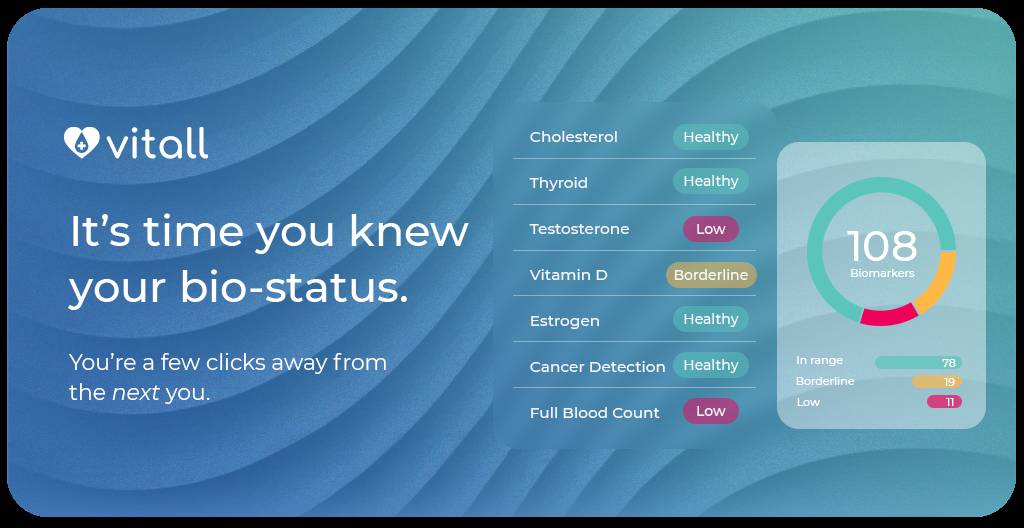
Biomarkers provide the missing layer. They reveal what is happening beneath the surface. Blood glucose regulation. Lipid metabolism. Hormonal balance. Inflammatory status.
Together, they form a more complete picture.
2. Increasing health awareness (driven by declining health)
There is a quiet contradiction emerging: Health information has never been more accessible. Yet population health continues to decline.
This tension is driving a new type of consumer.
One that is:
- More curious
- More proactive
- Less willing to wait for symptoms
- Increasingly sceptical of generic advice
People are beginning to ask more precise questions:
- Why am I tired despite sleeping well?
- Why is my cholesterol elevated?
- Why is my performance plateauing?
And they are looking for answers rooted in data, not guesswork.
3. The democratisation of testing
Historically, access to biomarker testing was limited to clinical settings. Today, at-home blood testing has changed that.
Individuals can now:
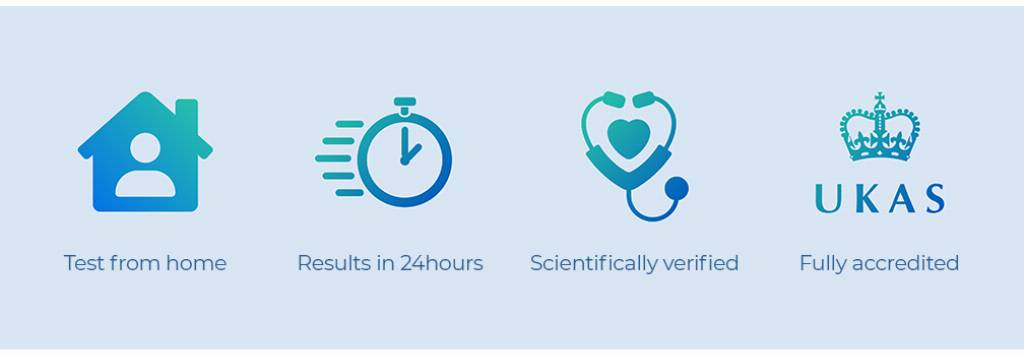
- Test from home
- Receive results within days
- Track changes over time
- Take action earlier (before symptoms even occur)
This shift is not just about convenience. It is about control.
From data to direction: the missing layer
Despite all of this progress, there remains a critical gap: Data alone does not change behaviour.
Receiving a cholesterol result, a hormone panel, or a vitamin deficiency marker often raises more questions than answers. This is something seen clearly in clinical practice.
As Dr Kirstyn Norman (The Cholesterol Coach) explains:
“Cholesterol results are often the start of the conversation, not the end. People need clear guidance on what those numbers mean and how to improve them in real life.”
This is where biomarker-led care evolves into something more complete.
Not just testing. Not just tracking. But interpretation and action.

Biomarkers in practice: real-world applications
Biomarker-led care is not theoretical. It is already being applied across multiple sectors.
1. Specialist-led care (e.g. cholesterol management)
Clinicians like Dr Kirstyn Norman use lipid markers, triglycerides, and metabolic indicators to guide personalised interventions.
Rather than generic advice, patients receive:
- Targeted nutrition strategies
- Lifestyle adjustments
- Clinical oversight where required
The difference is precision.
Two individuals with “high cholesterol” may require completely different approaches depending on their wider biomarker profile.
2. Performance and fitness environments
Gyms and performance centres are beginning to integrate biomarker data into training programmes.
For example, partnerships between Vitall and performance-focused gyms have enabled:
- Identification of testosterone imbalances
- Monitoring of inflammation and recovery
- Detection of nutrient deficiencies impacting performance
In more advanced environments, this extends to:
- Managing the physiological impact of anabolic steroid use
- Monitoring liver function and lipid profiles
- Supporting safer, more informed decision-making
For coaches and personal trainers, this creates a shift from: “Train harder” to “Train smarter, based on biology”
3. The supplement and wellness industry
A similar evolution is happening within supplementation. Rather than broad, one-size-fits-all recommendations, companies are increasingly exploring:
Test → Analyse → Targeted supplementation
This allows for:
- Personalised nutrient strategies
- More effective outcomes
- Reduced unnecessary supplementation
It also aligns with a growing consumer expectation: “I don’t want more products. I want the right products.”
4. Corporate and preventative health
Organisations are beginning to recognise the value of early detection and proactive health management.
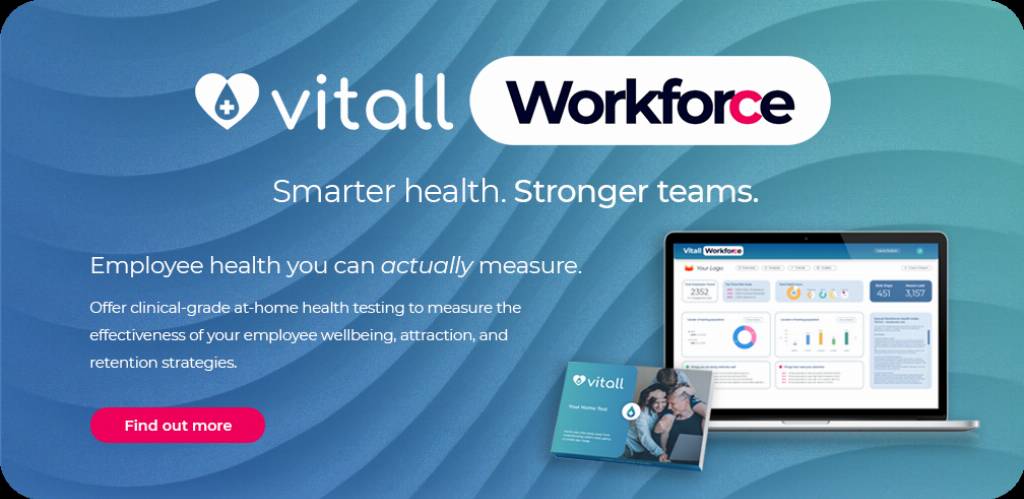
Biomarker-led testing allows for:
- Identification of risk factors before absence occurs
- Improved employee health outcomes
- Reduced long-term healthcare costs
This is particularly relevant in the UK, where NHS waiting times and GP access remain under pressure.
Is the wellness industry driving this… or responding to it?
There is often scepticism around the wellness space, and rightly so. Parts of the industry have moved ahead of strong clinical evidence. However, beneath the noise, there is a more grounded truth.
The demand for biomarker-led care is not purely created by the wellness industry.
It is emerging from:
- Declining global health
- Increasing personal responsibility
- Frustration with reactive healthcare systems
- Access to better tools
The industry is, in many ways, responding to a real and growing need.

The future: integrated, personalised, continuous
The future of healthcare is unlikely to be defined by a single system.
Instead, it will be layered and integrated.
- Wearables for continuous monitoring
- Biomarkers for internal insight
- Specialists for interpretation
- Technology for accessibility
At Vitall, this is the model being built through Vitall Connect.
A system designed to:
- Provide biomarker data
- Connect individuals with relevant specialists
- Enable meaningful next steps
Because ultimately, the most important question after any test is: “What should I do next?”
Conclusion: from awareness to action
Biomarker-led care represents a shift in how we understand health.
From reactive to proactive › From generalised to personalised › From assumption to evidence
But its real value lies not in the data itself. It lies in what that data enables:
- Better decisions.
- Earlier interventions.
- More precise outcomes.
And perhaps most importantly: A sense of clarity in a space that has long been dominated by uncertainty.
Get Yourself Tested With Vitall's Home Test Kits





Scientific review

Dr. Kate Bishop
Chief Scientific Officer - Vitall|Profile
Reviewed on 07/04/2026
Next review due 07/04/2027
Review focus: Blood biomarkers, laboratory testing methodology, and biochemical interpretation.
More Articles in This Category
Similar Articles
View all articles ›NHS Blood Test for Inherited Disorders Rolls Out, Aiming to Minimize Transfusion Side-Effects
10 Health Myths You Need To Stop Believing (And What to Do Instead)
Nutritional Synergy: How to Hack Your Meals Like a Pro
You’ve Had a Baby. Now Let’s Talk About What No One Told You (But Your Blood Will)
Why Wearables Only Tell Part of Your Health Story - And What’s Missing
Bridging The Gap Between Illness and Optimisation
From Taboo to Trend: The Rise of Injectable Peptides, Steroids and ‘Optimisation’
Longevity for Women in Their 40s: The Biomarkers That Matter Most
Cholesterol: The Good & The Bad
What Do My Cholesterol Test Results Mean?
References & Citations For Why Biomarker-Led Care Is Becoming the Cornerstone of Future Health Systems
Global Burden of Disease Collaborative Network (2020) Global Burden of Disease Study 2019 Results.
Tabák, A.G. et al. (2012) ‘Prediabetes: a high-risk state for diabetes development’, The Lancet, 379(9833), pp. 2279–2290.
World Health Organization (2023) Obesity and overweight.
World Health Organization (2023) Diabetes.
