Bridging The Gap Between Illness and Optimisation

If you’re unwell, the NHS is the right place to go. But what if you’re healthy and simply want to understand your body better? This article explores the gap between illness and optimisation, and explains how at-home blood testing offers a convenient, evidence-led starting point for people who want more than “fine."
There’s an awkward gap in modern healthcare that most of us can feel, but few people name.
If you’re unwell, the NHS is the best possible direction to take. It exists to prevent, diagnose, and treat illness, at scale, based on clinical need (Department of Health and Social Care, 2023). It’s built for impact where it matters most: reducing suffering, improving outcomes, and keeping people alive.
But what if you’re not “ill”… and you still want answers?
The “healthy, but not thriving” problem
A large and growing group of people don’t fit neatly into the classic patient pathway:
- young to middle-aged
- active lifestyle
- no chronic disease
- generally healthy diet
- “fine” on paper
Yet they still have questions like:
- Why do I feel tired mid-afternoon, even though I sleep?
- Why is recovery slower than it used to be?
- Am I training smart, or just training hard?
- Am I missing something that could affect performance or long-term health?
- How do I stay athletic into my 60s and 70s?
Here’s the uncomfortable truth: medicine often cannot answer the specifics of these questions with the certainty people want, because a lot of research is (quite rightly) focused on treating disease and preventing deterioration.
That’s not a failure of clinicians. It’s the reality of limited time, limited funding, and the ethical necessity of prioritising illness and high-risk disease.
Measure your general blood and immune health and ability to fight viral & bacterial infections. £79.00 Test your whole body as a system to understand and master your health. This all in one health test targets male lifestyle risks to put you in control.. £299.00 Take a whole body holistic view of female health risks. This all round health test provides the reassurance needed for a healthier you!. £299.00


Why “just do the basics” is both right… and unsatisfying
If you ask a clinician how to optimise your health, you’ll often hear advice that is broadly supported and reliably helpful:
- move regularly and build strength
- eat a high-quality diet (often plant-forward)
- get enough sleep
- keep vaccinations up to date
- reduce excess alcohol, don’t smoke
- minimise injury risk and train consistently
This isn’t hand-wavy. For example:
- UK guidance recommends adults accumulate at least 150 minutes of moderate activity weekly (or 75 minutes vigorous), plus muscle-strengthening activities on at least two days per week (UK Chief Medical Officers, 2019; NHS, 2022).
- Higher fruit and vegetable intake is consistently associated with lower all-cause mortality in large meta-analyses of prospective studies (Wang et al., 2014).
- Vaccination is recognised as a major pillar of disease prevention and is described by the NHS as one of the most important ways to protect health (NHS, 2024).
So yes, the basics are real.
But if you’re already doing them and still feel “not quite right”, or you’re chasing a specific performance goal, generic advice can feel like being told to “just be more… human”.
This is the gap.
The gap is where the scams breed
When people want more, and there’s no clear pathway, the wellness marketplace eagerly fills the silence.
- The programme promising “nutrient partitioning”
- The supplement stack that “optimises hormones”
- The influencer plan that claims to “unlock your mitochondria”
- The biohacking protocol that’s 80% vibes, 20% evidence
Sometimes these products are merely unhelpful. Sometimes they’re actively misleading.
One major reason this space becomes murky is that industry sponsorship and conflicts of interest can bias research, especially in nutrition and related lifestyle science. Systematic review evidence suggests industry-sponsored nutrition studies are more likely to reach conclusions favourable to sponsors (Chartres et al., 2016). More recent analyses in other nutrition-adjacent areas also report higher odds of favourable or neutral outcomes when conflicts of interest are present (López-Moreno et al., 2025).
That does not mean all industry-funded research is wrong. It means this territory demands caution, scrutiny, and intellectual honesty.
And crucially: it helps explain why healthy people, acting rationally, may drift towards questionable promises. They’re not necessarily gullible. They’re underserved.
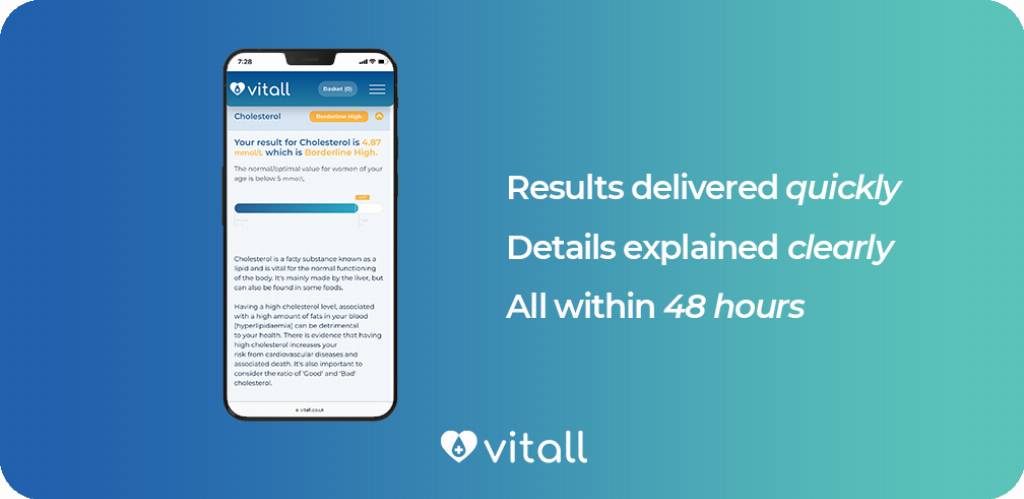
So where does at-home testing actually fit?
At-home testing isn’t here to compete with the NHS.
It belongs in a different moment of the journey: the “discovery and direction” phase.
The NHS Constitution describes a service designed to improve, prevent, diagnose and treat health problems (Department of Health and Social Care, 2023). The NHS Long Term Plan also frames a shift “from sickness to prevention” as part of its future direction (NHS England, 2019). But the NHS must triage and prioritise based on clinical need, and primary care time is finite.
At-home testing sits alongside this system, not on top of it.
Two common use cases
1) Discovery: when you’re symptomatic but not sure why
If you’re experiencing fatigue, brain fog, low mood, poor recovery, changes in weight, or cycle disruption, biomarkers can help you explore plausible contributors to those symptoms. Testing does not diagnose the cause on its own, but it can provide a clearer starting point for next steps and discussions with a clinician (NICE, 2021; NHS England, 2023).
2) Optimisation: when you’re healthy, but want to be better
If you train hard, care about longevity, and want to track markers over time, testing can help you move from “guessing” to “measuring”. This can be especially useful when paired with a structured training plan, nutrition strategy, and evidence-based supplementation to address confirmed deficiencies.
The convenience factor matters (and it’s not trivial)
Healthcare access isn’t just about availability. It’s about fit.
Home self-collection methods (including capillary microsampling and dried blood spot approaches) have been studied in multiple contexts and shown to be feasible for certain biomarkers and use cases, supporting remote monitoring and improving accessibility for some populations (Fuller et al., 2019; Prinsenberg et al., 2020).
Again, feasibility doesn’t mean every marker can be measured equally well by every at-home method. But it does support the basic claim: home sampling can be a practical route for certain forms of testing, when implemented properly.
How to use biomarker testing responsibly
This matters because “data” can either calm you or set your brain on fire.
A responsible testing approach looks like this:
- Use results for direction, not diagnosis. Biomarkers are pieces of a puzzle, not the whole picture.
- Treat abnormal or out-of-range results as a “next step”, not a conclusion. If something is out of range, speak to an appropriate clinician.
- Look for patterns over time. One result is a snapshot; trends are usually more meaningful.
- Avoid over-testing for reassurance. If your motivation is anxiety relief, more numbers can sometimes feed the loop rather than end it.
- Focus on interventions with strong evidence. Exercise, sleep, diet quality, alcohol reduction, and targeted correction of proven deficiencies tend to beat expensive “stacks” in both outcomes and sanity.
This aligns with the NHS move toward personalised care and shared decision-making: combining evidence with the individual’s goals and context to make better decisions (NHS England, 2023; NICE, 2021).
Measure your general blood and immune health and ability to fight viral & bacterial infections. £79.00 Test your whole body as a system to understand and master your health. This all in one health test targets male lifestyle risks to put you in control.. £299.00 Take a whole body holistic view of female health risks. This all round health test provides the reassurance needed for a healthier you!. £299.00
The bottom line
If something is wrong, the NHS is still the best place to go.
At-home testing isn’t a replacement. It’s a complement.
It’s for:
- people who are symptomatic and want a clearer starting point
- people who are healthy but want to optimise intelligently
- people who value convenience and time
- people who want evidence-led direction instead of influencer roulette
Because when you’re not ill, but you want more, you deserve something better than guessing.
Important information
This article is for educational purposes only and is not intended to replace medical advice, diagnosis, or treatment from a qualified healthcare professional.
At-home blood testing can provide useful information about your biomarkers, but results should be interpreted in context. They do not diagnose medical conditions on their own.
If you have symptoms, feel unwell, or are concerned about your health, you should contact your GP or NHS 111. If your results show values outside of the reference range, we recommend discussing them with your GP or a qualified clinician.
Seek urgent medical attention (A&E or 999) if you experience:
- Chest pain, pressure, or tightness
- Sudden shortness of breath
- Signs of stroke (face drooping, arm weakness, speech difficulty)
- Severe abdominal pain
- Fainting or loss of consciousness
- Vomiting blood or passing black stools
- Suicidal thoughts or severe mental distress
At-home testing is designed to support health awareness, discovery, and optimisation. It is not a substitute for NHS care, which remains the best route for diagnosis, treatment, and management of illness.
For more information, visit:
- NHS
- NHS 111
Get Yourself Tested With Vitall's Home Test Kits






Scientific review

Dr. Kate Bishop
Chief Scientific Officer - Vitall|Profile
Reviewed on 06/02/2026
Next review due 06/02/2027
Review focus: Blood biomarkers, laboratory testing methodology, and biochemical interpretation.
More Articles in This Category
Similar Articles
View all articles ›NHS Blood Test for Inherited Disorders Rolls Out, Aiming to Minimize Transfusion Side-Effects
10 Health Myths You Need To Stop Believing (And What to Do Instead)
Nutritional Synergy: How to Hack Your Meals Like a Pro
You’ve Had a Baby. Now Let’s Talk About What No One Told You (But Your Blood Will)
Why Wearables Only Tell Part of Your Health Story - And What’s Missing
From Taboo to Trend: The Rise of Injectable Peptides, Steroids and ‘Optimisation’
Why Biomarker-Led Care Is Becoming the Cornerstone of Future Health Systems
Longevity for Women in Their 40s: The Biomarkers That Matter Most
How Can I Keep My Liver Healthy?
The Importance of a Health MOT
References & Citations For Bridging The Gap Between Illness and Optimisation
Chartres, N., Fabbri, A. and Bero, L. (2016) ‘Association of Industry Sponsorship With Outcomes of Nutrition Studies: A Systematic Review and Meta-analysis’, JAMA Internal Medicine. Available at: https://jamanetwork.com/journals/jamainternalmedicine/fullarticle/2575884 (Accessed: 4 February 2026).
Department of Health and Social Care (2023) The NHS Constitution for England. Available at: https://www.gov.uk/government/publications/the-nhs-constitution-for-england/the-nhs-constitution-for-england (Accessed: 4 February 2026).
Fuller, G. et al. (2019) ‘Feasibility of patient-centric remote dried blood sampling’, [Article in PMC]. Available at: https://pmc.ncbi.nlm.nih.gov/articles/PMC8464354/ (Accessed: 4 February 2026).
López-Moreno, M. et al. (2025) ‘Industry study sponsorship and conflicts of interest…’, The American Journal of Clinical Nutrition (abstract). Available at: https://www.sciencedirect.com/science/article/abs/pii/S0002916525001261 (Accessed: 4 February 2026).
NHS (2022) Physical activity guidelines for adults aged 19 to 64. Available at: https://www.nhs.uk/live-well/exercise/physical-activity-guidelines-for-adults-aged-19-to-64/ (Accessed: 4 February 2026).
NHS (2024) Why vaccination is important and the safest way to protect yourself. Available at: https://www.nhs.uk/vaccinations/why-vaccination-is-important-and-the-safest-way-to-protect-yourself/ (Accessed: 4 February 2026).
NHS England (2019) NHS Long Term Plan. Available at: https://www.longtermplan.nhs.uk/ (Accessed: 4 February 2026).
NHS England (2023) Shared decision-making. Available at: https://www.england.nhs.uk/personalisedcare/shared-decision-making/ (Accessed: 4 February 2026).
NICE (2021) About shared decision making. Available at: https://www.nice.org.uk/what-nice-does/our-guidance/about-nice-guidelines/about-shared-decision-making (Accessed: 4 February 2026).
Prinsenberg, T. et al. (2020) ‘Dried blood spot self-sampling at home is a feasible technique…’, PLOS ONE, 15(4). Available at: https://journals.plos.org/plosone/article?id=10.1371/journal.pone.0231385 (Accessed: 4 February 2026).
UK Chief Medical Officers (2019) UK Chief Medical Officers’ Physical Activity Guidelines. Available at: https://assets.publishing.service.gov.uk/media/5d839543ed915d52428dc134/uk-chief-medical-officers-physical-activity-guidelines.pdf (Accessed: 4 February 2026).
Wang, X. et al. (2014) ‘Fruit and vegetable consumption and mortality from all causes, cardiovascular disease, and cancer: systematic review and dose-response meta-analysis’, BMJ, 349:g4490. Available at: https://www.bmj.com/content/349/bmj.g4490 (Accessed: 4 February 2026).
