What Is The Haematocrit Test For?
Your haematocrit measures how much of your blood is made up of cells and is expressed as a percentage.
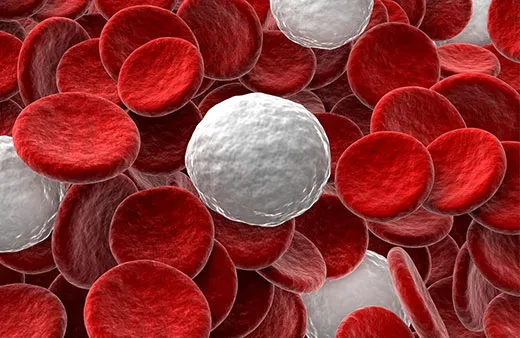
Nearly all of the cells in your blood are red blood cells (RBCs).
All you need to know about testing Haematocrit levels with a laboratory test





19.3% of people tested have Haematocrit levels which are too high.
And 1.0% have levels that are too low.
The average Haematocrit result is 0.4
Note what is normal for you may differ for your age and sex.
Your haematocrit measures how much of your blood is made up of cells and is expressed as a percentage.
Nearly all of the cells in your blood are red blood cells (RBCs).
By buying a laboratory test kit with professional nurse or clinic collection, you can accurately measure Haematocrit for total reassurance.
Professional analysis in an accredited laboratory ensures rapid result delivery.
The Vitall Full Blood Count (FBC) nurse or clinic test kit includes a Haematocrit test and is available for just £79.00.
Tests which include a Haematocrit test:
The most common cause of increased packed cell volume (haematocrit) is dehydration. After fluid intake (for example, drinking water), the haematocrit level often returns to normal levels.
However, increased haematocrit can also indicate that there are too many red blood cells in the blood, a condition known as polycythaemia.
The additional red blood cells in polycythaemia make the blood thicker. This can make it less able to travel through capillaries and reach the body’s tissues. If severe, it can lead to blood clots, which can be very serious.
Haemoglobin and red cell count results from the same test panel are commonly reviewed alongside this result, as polycythaemia is often associated with higher levels of both.
When polycythaemia is suspected, this finding is often reviewed further and may involve specialist input to clarify the cause.
A decreased haematocrit (packed cell volume) is consistent with anaemia, and further testing is often used to clarify the cause.
Many conditions can be associated with a low haematocrit, including nutritional deficiencies (such as iron or vitamin deficiency), inflammatory conditions, cirrhosis of the liver, and bone marrow disorders.
A low haematocrit is usually interpreted alongside other full blood count results, such as haemoglobin.
Measure your Haematocrit levels and measure your general blood and immune health and ability to fight viral & bacterial infections with a Full Blood Count (FBC) nurse or clinic finger-prick bloodtest kit
You get the convenient testing with the reassurance of professional clinical analysis. Your results are delivered quickly & securely online.
This Full Blood Count (FBC) Test is advised if you:
After your sample reaches the lab, you should expect to receive your results 24 hours, although this is not guaranteed.The results will be reported securely to you securely online, with clear instructions about what your results mean and any steps you might need to take.
The result of a Haematocrit test is expressed as a percentage. In general, for men, a normal range is between 38.8% and 50.0%, while for women, it's generally between 34.9% and 44.5%. Your report will always contain the correct range for your age and sex. Values outside these ranges suggest a potential health issue and further consultation with your GP may be necessary.

Dr. Shahzaib Ahmad MBBS, BSc, MRCP, FRCA, FFICM
Clinical Supervisor - Vitall|GMC 7495062|Profile
Reviewed on 03/02/2026
Next review due 03/02/2027
Review focus: Blood biomarkers, laboratory testing methodology, and biochemical interpretation.






 Basophils