
Female Hormones (Menopause) Home Test Kit
Check female sex hormones and assess menopausal status

Female Hormones (Menopause) Home Test Kit
Finger-prick blood home test kit, clinic visit or home nurse visit


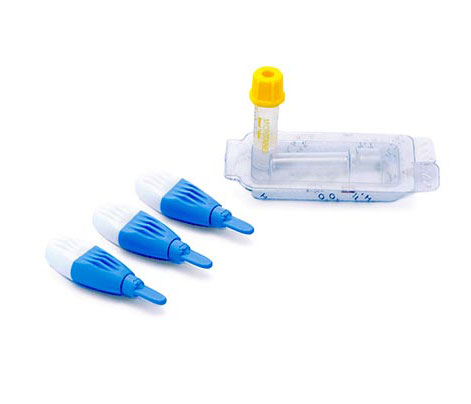
Collect your sample easily from home
Female Hormones (Menopause) Home Test Kit
Finger-prick blood home test kit, clinic visit or home nurse visit



Female Hormones (Menopause) Home Test Kit
Check female sex hormones and assess menopausal status
£69.00
Includes FREE delivery!
Hot flushes, night sweats, broken sleep, anxiety, low libido, brain fog, weight gain. These symptoms can build slowly, and it is not always obvious whether stress, ageing, or hormonal change is driving them.
This test measures follicle-stimulating hormone (FSH) and luteinising hormone (LH) to help assess whether you may be moving towards menopause, including earlier changes that can occur before the usual age range. Results are most useful when the sample is taken at the right time in your cycle.
If you are still having periods, take the test on day three of your menstrual cycle (day one is the first day of bleeding). If you have recently stopped contraception or HRT, wait until your cycles are regular again before testing. If you want clearer, data-led insight into whether hormones may be part of the picture, this test is a practical place to start.
How would you like to take your test?
How would you like to take your test?






What the Female Hormones (Menopause) test is for
The menopause occurs naturally as a woman's oestrogen levels decline, typically between the ages of 45 and 55. Consequently periods stop and natural pregnancy is no longer possible.
But it's also possible to experience a premature menopause at an earlier age. Given the impact of the menopause on your wellbeing and ability to have a child, we recommend our hormone test panel for all women over the age of 35.
The symptoms of menopause - famously hot flushes - can also include night sweats, difficulty sleeping, reduced libido, memory problems and anxiety, often lasting for several years.
If you do have the menopause, symptoms can be relieved through hormone replacement therapy (HRT) which involves taking oestrogen to replace your declining levels. We would also recommend monitoring your Bone Health as lowered oestrogen levels put you at an increased risk of developing osteoporosis (weak bones).
Recognising premature menopause and treating it can result in a significant change to your quality of life!
Small changes,
informed by
real data,
compound fast
Find out where to start...
What's included in your test?

The following sample guidance is required for this test, please follow carefully:
- One easy self-collection sample
- If you menstruate, take your sample on day three of your menstrual cycle (where day one is the first day of your period).
- If you use hormone infused hand creams, gels or sprays within 72 hours before collecting your sample, there is a risk of sample contamination. If your treatment cannot be paused for 72 hours, wear gloves when applying the treatment and avoid contact with the hand from which the sample will be collected from. Additionally, it is crucial to thoroughly wash your hands before you collect your sample.
Get tested fast with a home test kit, using a finger-prick blood sample. Collect easily with no needles, with free priority postage to an accredited laboratory.
You can also opt for a clinic visit, for professional sample collection by experienced staff, in a comfortable & caring environment.
This Female Hormones (Menopause) test measures the following biomarkers to check female sex hormones and assess menopausal status.

Specialist Tests
Need more details?
Learn how the self collection process works, what's in the kit, and your options for clinic and home nurses visits.
How this works ›Why take the Female Hormones (Menopause) test?
Our Female Hormone home blood test kit allows you to measure essential female sex hormones.
It is recommended for all women over 35 to assess your risk from the menopause.
If you do have the menopause, we also recommend monitoring your Bone Health as lowered oestrogen levels put you at an increased risk of developing osteoporosis (weak bones).
Note: If you are still having periods then as female hormones fluctuate over time in a natural rhythm it is important this test is taken on day three of your menstrual cycle (where day one is the first day of your period). We recommend your periods have returned to a regular cycle before testing, if you have recently stopped hormone replacement or contraception.
- have a low sex drive & loss of libido
- Are aged over 35
- Are experiencing hot flushes
- Experience poor memory
- Find it difficult to sleep properly
- Have had weight gain
- Often feel anxious for no reason
- Suffer from chronic fatigue & tiredness
Order your Female Hormones (Menopause) test and get the insights you need to feel your best.
Medical disclaimer: This test provides health information and is not a substitute for clinical assessment, diagnosis or treatment. Results should be considered alongside your symptoms, medical history and any medicines you take. If you are concerned about your results or your health, speak to a qualified healthcare professional. For urgent concerns, contact NHS 111, your GP, or call 999 in an emergency.
Expert Analysis In An Accredited Laboratory
Once your sample reaches the UKAS-accredited lab, the magic begins. But this isn't simple science – we insist on state-of-the-art automated technology to ensure your results are processed with unmatched accuracy and efficiency.
- UKCA marked test kits for full regulatory compliance.
- IVDD certified diagnostics for total quality reassurance.
- Medically led UKAS accredited laboratory testing for accurate results.



Dr. Kate Bishop
Chief Scientific Officer
"All testing is conducted by healthcare professionals in a medically-led laboratory. Accredited lab testing is the best way to be confident that your test results are accurate. Get tested now for complete reassurance."
Delivery and results
The Female Hormones (Menopause) test offers a Finger-prick blood home test kit, clinic visit or home nurse visit for sample collection. Kits are posted to your home free of charge.
Easily sampling from home or at a clinic offers you the most convenient and stress-free way to get tested. Your test also includes free 24 hour tracked sample return to the laboratory.

1. Order Your Test

2. Post Your Samples

3. Get Your Results
Oestrogens are steroid sex hormones responsible for female reproductive organ function and secondary sex characteristics.
Together with progesterone they regulate the menstrual cycle & help maintain a healthy pregnancy.
There are three main forms of oestrogen and this test measures oestradiol (E2) as a good marker for overall ovarian function.
| Test | Result | Reference | Status |
|---|---|---|---|
| Oestrogen (Estradiol) | 226pmol/L | 98-571 | Normal |
226 Oestrogens are steroid sex hormones responsible for female reproductive organ function and secondary sex characteristics. | |||
| Follicle-stimulating Hormone | 4.9IU/L | 3.5-12.5 | Normal |
| Luteinising hormone | 4.6IU/L | 2.4-12.6 | Normal |

Traffic Light System Instantly see which health markers are in a healthy range (green), borderline (yellow), or need attention (red).

Detailed Explanations Each marker includes an overview of its role in your body, what it means to have high or low levels, and actionable tips to improve.
Tracked Changes See how your health markers have changed over time, track your progress, and optimise your health.

Expert Guidance We don't just hand over data – we empower you with insights to make informed decisions about your health.
What happens after your results?

Testing shows where you are today. Prevent helps you focus on where you want to be.

Using your test results, metrics and symptoms, you can gain further insights to achieve your health goals.

Connect with expert medical partners focused on helping you achieve better health.

We are highly selective over who we choose to work with, so you can be confident you are in good hands.
What people say about this test

Tanya
Hannah
Julie
Frequently Asked Questions
The perimenopause is a complex transition, and there is not a single menopause blood test that provides an accurate diagnosis. The hormonal patterns during perimenopause are very dynamic, making it difficult to establish what hormone levels to expect and when.[13]
According to the NICE guidelines, perimenopause can be diagnosed in women over 45 if they have irregular periods and menopausal symptoms.[11]
For the rest of women (under 45 years or without typical symptoms), FSH levels may be useful for determining if you are perimenopausal,[1] but you should still contact your GP to rule out other conditions that may alter the levels of this hormone.
[1] Nelson HD. Menopause. Lancet. 2008;371(9614):760-770. doi:10.1016/S0140-6736(08)60346-3. Available from: https://doi.org/10.1016/s0140-6736(08)60346-3
[2] Takahashi TA, Johnson KM. Menopause. Med Clin North Am. 2015;99(3):521-534. doi:10.1016/j.mcna.2015.01.006. Available from: https://pubmed.ncbi.nlm.nih.gov/25841598/
[3] Dalal PK, Agarwal M. Postmenopausal syndrome. Indian J Psychiatry. 2015;57(Suppl 2):S222-S232. doi:10.4103/0019-5545.161483. Available from: https://www.ncbi.nlm.nih.gov/pmc/articles/PMC4539866/
[4] Monteleone P, Mascagni G, Giannini A, Genazzani AR, Simoncini T. Symptoms of menopause - global prevalence, physiology and implications. Nat Rev Endocrinol. 2018;14(4):199-215. doi:10.1038/nrendo.2017.180. Available from: https://pubmed.ncbi.nlm.nih.gov/29393299/
[5] National Health Service (NHS UK). Hormone Replacement Therapy (HRT). Accessed 2 August 2021. Available from: https://www.nhs.uk/conditions/hormone-replacement-therapy-hrt/
[6] Bruce D, Rymer J. Symptoms of the menopause. Best Pract Res Clin Obstet Gynaecol. 2009;23(1):25-32. doi:10.1016/j.bpobgyn.2008.10.002. Available from: https://pubmed.ncbi.nlm.nih.gov/19056320/
[7] El Khoudary SR, Greendale G, Crawford SL, et al. The menopause transition and women's health at midlife: a progress report from the Study of Women's Health Across the Nation (SWAN). Menopause. 2019;26(10):1213-1227. doi:10.1097/GME.0000000000001424. Available from: https://www.ncbi.nlm.nih.gov/pmc/articles/PMC6784846/
[8] Gold EB. The timing of the age at which natural menopause occurs. Obstet Gynecol Clin North Am. 2011;38(3):425-440. doi:10.1016/j.ogc.2011.05.002. Available from: https://www.ncbi.nlm.nih.gov/pmc/articles/PMC3285482/
[9] NHS. Menopause. Accessed 2 August 2021. Available from: https://www.nhs.uk/conditions/menopause/
[10] NHS. Early menopause. Accessed 3 August 2021. Available from: https://www.nhs.uk/conditions/early-menopause/
[11] National Institute for Health and Care Excellence. Menopause: diagnosis and management [Internet]. [London]: NICE; Nov 2015 [updated 2019 Dec; cited 2021 Aug 3]. (Clinical guideline [NG23]). Available from: https://www.nice.org.uk/guidance/ng23.
[12] NHS. How do I know I've reached menopause if I'm on the pill?. Accessed 4 August 2021. Available from: https://www.nhs.uk/conditions/contraception/menopause-contraceptive-pill/
[13] Hall JE. Endocrinology of the Menopause. Endocrinol Metab Clin North Am. 2015;44(3):485-496. doi:10.1016/j.ecl.2015.05.010. Available from: https://www.ncbi.nlm.nih.gov/pmc/articles/PMC6983294/
[14] Lab Tests Online UK. LH Test. Accessed 4 August 2021. Available from: https://labtestsonline.org.uk/tests/lh-test
[15] Ruggiero RJ, Likis FE. Estrogen: physiology, pharmacology, and formulations for replacement therapy. J Midwifery Womens Health. 2002;47(3):130-138. doi:10.1016/S1526-9523(02)00233-7. Available from: https://doi.org/10.1016/s1526-9523(02)00233-7
There are many ways to diagnose menopause, as recommended by the National Institute for Health and Care Excellence (NICE).[11]
Women aged under 45 years
The NICE guidelines recommend that a menopause blood test measuring FSH should be used to diagnose menopause in women aged 40 to 45 years that present typical menopausal symptoms, including irregularities in their cycles. FSH may be employed for diagnosing early menopause in women under 40 years of age.[11]
FSH levels can be correlated to levels of oestrogen and LH to aid in the diagnosis of menopause and other reproductive conditions. It may also be relevant to test for thyroid disease because it may mimic various menopausal symptoms.[3]
Women aged over 45 years
In most situations, your doctor will be able to diagnose menopause based on your symptoms if you are over 45 years old and you have spent at least 12 months without having menstrual bleeding. Similarly, a professional should be able to diagnose menopause in women over 45 without a uterus.[11] Laboratory blood tests (such as FSH, LH, or oestrogens included in a menopause test kit) are not routinely required for these women unless another condition is suspected.
Women using hormonal contraception
If you are receiving hormonal contraceptives (contraceptive pill, patch, implant, among others), you may not have menstruations. This makes it difficult to tell whether or not you have reached the menopause. If you are using a combined pill (oestrogen plus progestogen), you will probably present a monthly bleeding, even after running out of oocytes (menopause). On the other hand, women using a progestogen-only pill may have irregular or absent menstruations. In this instance, the NHS suggests that measuring FSH levels witha menopause test kit may be useful for women over 50, but this is not a reliable indicator.[12]
The NHS also recommends that women over 50 change from a combined to a progestogen-only pill. When a woman is 55, getting pregnant is very unlikely and it is safe to stop using hormonal contraception. However, it is still necessary to use condoms or other barrier methods to prevent sexually transmitted infections.[12]
Symptoms may begin a couple of years before the menopause, turning heavier as a woman approaches her last menstruation. Before and after the menopause, women may experience symptoms associated with hormonal imbalances, such as:[2][6][7]
- Hot flushes.
- Night sweats.
- Irregular menstruations (before menopause).
- Breast tenderness.
- Sleeping problems.
- Mood changes.
- Palpitations.
- Nervousness.
- Headaches.
- Memory loss.
- Depressive symptoms.
As years go by and hormone levels drop definitely, postmenopausal women may develop:[2][6][7]
- Vaginal dryness.
- Vaginal irritation.
- Painful urination.
- Urinary incontinence.
- Frequent urination at night.
- Pain during sexual intercourse.
- Decreased sexual desire.
- Undesired weight gain.
- Depressive symptoms.
The Vitall Female Hormones (Menopause) Home Test Kit includes the essential hormones required for helping women and doctors during the assessment of menopausal status.
Follicle-stimulating Hormone (FSH):
This hormone is produced by the pituitary gland, located in the brain. As the name implies, FSH promotes the development of ovarian follicles and works alongside LH during the cycle. In the first half of the reproductive cycle, FSH prompts oestrogen production in the follicles; in the second half (after ovulation), it stimulates progesterone. At the same time, oestrogen and progesterone levels help to regulate FSH. As a woman approaches the menopause, the ovaries reduce oestrogen production and FSH levels increase.[13]
Luteinising hormone (LH):
Just like FSH, LH is produced in the pituitary gland. While LH promotes the production of oestrogen and progesterone, its main mission is to trigger ovulation. Oestrogen levels help to regulate how much LH is produced in the pituitary gland;[14] this means that LH levels may increase during perimenopause,[3] but usually to a lesser extent when compared with FSH.[13]
Oestrogen (E2):
Oestrogen is a group of hormones that help the body to develop female characteristics. The most important and potent oestrogen is oestradiol (also called E2), which is produced in the ovaries of premenopausal women. Oestradiol levels are the ones that decrease during the menopause. Postmenopausal women keep making a less potent oestrogen called oestrone (E1), which is produced in the fatty tissue.[15]
Taking the Vitall menopause home test ensures accurate measurement of these essential biomarkers, giving you a comprehensive overview of your menopausal status.
The menopause is the moment of a woman’s life when menstrual cycles come to an end, which usually occurs after 45 years of age. As a result, natural pregnancy is no longer possible.
This transition constitutes a deeply personal experience: some women may think of it as a liberating moment in their lives, while others find it troublesome and disruptive.
Most women will experience menopause symptoms with varying degrees of intensity; in certain cases, these symptoms may be too burdensome and some women may feel prompted to seek medical advice.[1]
Understanding the Reproductive Cycles
The hallmark of menopause is the depletion of oocytes (immature or unfertilised eggs). During each ovarian cycle, a group of oocytes grows in the form of ovarian follicles. The best oocyte from the group is released during ovulation, and the rest are discarded.
While the ovarian cycle prepares the best oocyte for ovulation, the menstrual cycle prepares the lining of the uterus (endometrium) for receiving and implanting a fertilised egg. These reproductive cycles work continuously under the regulation of oestrogen, progesterone, follicle-stimulating hormone (FSH), and luteinising hormone (LH).[2]
Since there is a fixed number of oocytes, the reproductive cycles stop functioning when the ovaries run out of them. The production of female hormones is reduced, and menopause ensues.
However, this process does not occur drastically, from one day to the other. Rather than that, it is a natural transition that is marked by various phases.[2]
Perimenopause, menopause, and postmenopause
Perimenopause, also known as menopausal transition, marks the beginning of hormonal fluctuation. Female hormone levels begin to decrease, which results in menopausal symptoms and disruption of the menstrual cycle. During this phase, the female body prepares for menopause and is expected to last for 4-8 years in most women.[3]
As women approach menopause, they may spend 60 days or more without menstrual bleeding (missing two menstrual cycles or more), and their symptoms may become more intense.[1]
The menopause represents the last menstrual period and is usually diagnosed after 12 consecutive months without menstrual bleeding if you are over 50 or after 2 years if you are under 50.
This final menstruation is followed by the postmenopause. During this stage, most women will present menopausal symptoms for one or two years; for some women, the symptoms may continue for more than ten years.[3]
Postmenopausal women have a higher risk of developing multiple diseases; the most important examples include osteoporosis, arthritis, sarcopenia, diabetes, and cardiovascular disease.[4]
To reduce the risk of these conditions and alleviate menopausal symptoms, women may receive hormone replacement therapy (HRT). The goal of HRT is to recover the normal hormone levels your body had before menopause. A menopause test kit can be used to establish your current baseline before proceeding with appropriate HRT[5]
Under normal circumstances, it may be difficult for anyone to accurately point out the start of her perimenopause without a menopause blood test.
Some premenopausal women may present mild menopause symptoms and some menopausal women may not necessarily show evident signs, making it difficult to trace the beginning of the perimenopause with accuracy.
Scientific evidence from industrialised countries reflects that the onset of perimenopause frequently occurs around the age of 47 years and most women reach the menopause when they are 50-52 years old.[8]
These findings are consistent with data from the United Kingdom, where women experience the menopause between 45 and 55 years of age, with an average age of 51 years.[9] Some studies have also shown that women are entering the menopause later in life when compared to previous generations.[8]
Various factors influence the onset of perimenopause and menopause. These include race, education, use of oral contraceptives, weight, diet, and genetic factors. The best predictors of early menopause are smoking and low parity (giving birth to few or no children).[8]
While the menopause is a natural and expected process, it should not occur in women younger than 45 years of age. If a menopause test indicates premature ovarian insufficiency or early menopaus, this may be related to a health disorder and should be studied by a professional.
If you experience menopausal symptoms before the usual age, you should contact your GP for medical guidance and assess your hormone levels using a menopause blood test.[10]
You can take a menopause home test if you present menopausal symptoms. The most important signs to look for are those related to irregular cycles, such as having prolonged or absent menstrual cycles without any evident reason.
If you are still menstruating, remember to collect your sample on the third day of your cycle (which would be the third day after beginning your period). Doing so is very important because hormone levels may vary considerably across the menstrual cycle. Taking your menopause home test at the right moment is essential to provide an accurate measurement.
Home test kits contain full instructions and everything you need to safely collect and return your sample. Please see the following details relating to this test below:
- One easy self-collection sample
- If you menstruate, take your sample on day three of your menstrual cycle (where day one is the first day of your period).
- If you use hormone infused hand creams, gels or sprays within 72 hours before collecting your sample, there is a risk of sample contamination. If your treatment cannot be paused for 72 hours, wear gloves when applying the treatment and avoid contact with the hand from which the sample will be collected from. Additionally, it is crucial to thoroughly wash your hands before you collect your sample.
We also have a guide on how to collect a high quality sample which you may find useful.
The Vitall Female Hormones (Menopause) test is available online for just £69.00. Your home test kit will be dispatched by free first class post for delivery to your door.
For the best value testing you can also upgrade this Female Hormones (Menopause) home test to tests which also measure other biomarkers, including:
- Female Fertility (Sex Hormones) - Check female sex hormones and assess infertility risk.
When you checkout to buy your Female Hormones (Menopause) test online we also offer additional options, including:
- Visit the Patient Reception in central London for just £35. Your Female Hormones (Menopause) test sample can be collected by a qualified nurse for immediate analysis.
- Have a nurse visit you to collect the sample for your Female Hormones (Menopause) test, this is nationwide for just £79.
Whichever option you choose at checkout, buying the best Female Hormones (Menopause) test online in the UK with Vitall ensures high quality results from an accredited laboratory.
Take control of your health today with one of Vitall’s home blood tests.
Upgrades For The Female Hormones (Menopause) Test

Articles About Female Hormones (Menopause) Testing
View all articles ›Longevity for Women in Their 40s: The Biomarkers That Matter Most
Ladies: 5 Everyday Habits That Are Wrecking Your Hormones (and What to Do Instead)
Menopause & HRT: The Complete Guide For When You Feel Like An Alien In Your Own Body
What Is Perimenopause? The Truth Behind the Hormonal Rollercoaster Nobody Talks About
Hot Flushes and Brain Fog? Here’s How to Know if It’s Actually Menopause
The Complete Guide to Menopause and Hormonal Health
The 4 Seasons of Your Cycle: A Guide to Female Hormonal Health
20 Foods That Naturally Regulate Your Hormones
Your Essential Guide to Purchasing Hormone Blood Tests
Testing for Menopause: Home Test Kits vs GP Testing
Clinical review

Dr. Shahzaib Ahmad MBBS, BSc, MRCP, FRCA, FFICM
Clinical Supervisor - Vitall|GMC 7495062|Profile
Reviewed on 09/06/2026
Next review due 09/06/2027
Review focus: Blood biomarkers, laboratory testing methodology, and biochemical interpretation.
£69.00
