Here's Why You're so Exhausted - Scientifically Speaking

Every year, millions of people across the UK wake up feeling flat, foggy, unmotivated and bone-deep tired. The default explanation is almost automatic: It’s dark. It’s cold. It’s January. In this article we explore the real reasons why.. and it's not just the weather.
January fatigue is common in the UK due to a mix of post-holiday sleep debt, reduced daylight and vitamin D, diet and alcohol changes, and underlying imbalances such as low iron, low B12, thyroid disruption, blood sugar instability, or high stress hormones. If fatigue lasts 4+ weeks, worsens, or comes with symptoms like breathlessness, low mood, palpitations, or brain fog, it’s worth testing key biomarkers rather than guessing.
The Post-December Physiological Hangover (Yes, That’s a Real Thing)
December doesn’t just end with fireworks and leftover cheese. It leaves behind a biological footprint.
For many people, the festive period quietly stacks up a perfect storm of physiological stressors:
1. Sleep Debt Accumulates
Late nights, disrupted routines, alcohol-fragmented sleep and social jet lag all compound. Even small nightly deficits add up. By January, your nervous system is running on borrowed energy.
Chronic partial sleep deprivation has been shown to impair glucose metabolism, elevate cortisol and blunt cognitive performance even when people feel they’ve “caught up” (Van Dongen et al., 2003).
Key idea: sleep loss doesn’t just make you sleepy. It changes your biology.
(Walker, 2017; Medic et al., 2017)
2. Alcohol’s Long Tail
Alcohol doesn’t clock off on 1 January.
Beyond the obvious hangover, alcohol disrupts REM sleep, increases inflammatory markers and interferes with nutrient absorption particularly B vitamins, magnesium and zinc. Repeated exposure in December can leave the body under-resourced just when it needs stability most (He et al., 2019).
3. Sugar, Stress & Hormones
High sugar intake spikes insulin repeatedly, followed by crashes that feel like fatigue, irritability and brain fog. Over time, this can dysregulate blood glucose control, making “low energy” feel like your new baseline (Ludwig et al., 2018).
Meanwhile, cortisol, the body’s primary stress hormone, often stays elevated long after the stressor ends. The result? Wired but tired.

Fully identify & optimise nutritional deficiencies.
£99.00
Add to Cart ›
Test your whole body as a system to understand and master your health. This all in one health test targets male lifestyle risks to put you in control..
£299.00
Add to Cart ›
Take a whole body holistic view of female health risks. This all round health test provides the reassurance needed for a healthier you!.
£299.00
Add to Cart ›
The UK Winter Problem Nobody Escapes: Vitamin D
If you live in the UK, vitamin D depletion in winter is not a niche issue. It’s the norm.
From October to March, UVB radiation is insufficient for meaningful vitamin D synthesis through the skin. Even people who spend time outdoors are affected.
Data from the UK National Diet and Nutrition Survey consistently shows that up to 40% of adults have insufficient vitamin D levels in winter, with around 20% falling into deficiency (Public Health England, 2016).
Low vitamin D is associated with:
- Fatigue and muscle weakness
- Low mood and depressive symptoms
- Impaired immune resilience
Vitamin D receptors exist in almost every tissue in the body. This isn’t just about bones. It’s about energy metabolism, immune signalling and neuromuscular function.
If January feels heavier than it should, vitamin D is often part of the story.

When “Burnout” Is Actually Biochemical
Burnout has become a cultural catch-all. But biologically speaking, many people labelled as “burnt out” are actually running on imbalanced physiology.
Here are the usual suspects hiding beneath the surface.
Iron Deficiency (With or Without Anaemia)
Iron deficiency is one of the most common nutrient deficiencies in the UK, particularly in women of reproductive age.
Low iron reduces oxygen delivery to tissues. The result is fatigue that doesn’t improve with rest, shortness of breath, cold intolerance and reduced exercise tolerance (Camaschella, 2015).
Crucially, iron deficiency can exist before anaemia develops, meaning standard blood checks often miss it.
Vitamin B12: The Energy Bottleneck
B12 is essential for red blood cell production, DNA synthesis and neurological function. Sub-optimal levels can present as fatigue, brain fog, low mood and tingling sensations.
Absorption issues are common, especially in people with gut dysfunction, low stomach acid, or those following plant-based diets without adequate supplementation (O’Leary & Samman, 2010).
Thyroid Dysfunction
Your thyroid hormones regulate metabolic rate. When they’re off, everything slows down.
Subclinical hypothyroidism can feel like:
- Persistent tiredness
- Weight gain despite unchanged habits
- Cold sensitivity
- Low mood
And yet it often flies under the radar because symptoms develop gradually (Peeters, 2017).
Cortisol Dysregulation
Chronic stress doesn’t always mean high cortisol. In prolonged stress states, cortisol patterns can become flattened or erratic.
This leads to energy crashes, poor stress tolerance, disrupted sleep and that familiar phrase: “I’m exhausted, but I can’t switch off.”
Blood Sugar Instability
Repeated blood sugar swings create a rollercoaster of energy highs and lows. Mid-afternoon crashes, morning fatigue and sugar cravings are common signals that glucose regulation needs attention (ADA, 2020).
Fully identify & optimise nutritional deficiencies.
£99.00
Add to Cart ›
Test your whole body as a system to understand and master your health. This all in one health test targets male lifestyle risks to put you in control..
£299.00
Add to Cart ›
Take a whole body holistic view of female health risks. This all round health test provides the reassurance needed for a healthier you!.
£299.00
Add to Cart ›
The Real Danger: Normalising Fatigue
This is where January becomes genuinely risky.
When tiredness is widespread, it becomes socially acceptable. People stop questioning it. They normalise dragging themselves through the day, fuelling with caffeine and hoping spring will fix it.
But chronic fatigue is not benign.
Long-term low energy is associated with:
- Reduced cognitive performance
- Increased cardiometabolic risk
- Higher rates of depression and anxiety
- Lower immune resilience
Ignoring fatigue doesn’t make it disappear. It just delays understanding what your body is trying to tell you.
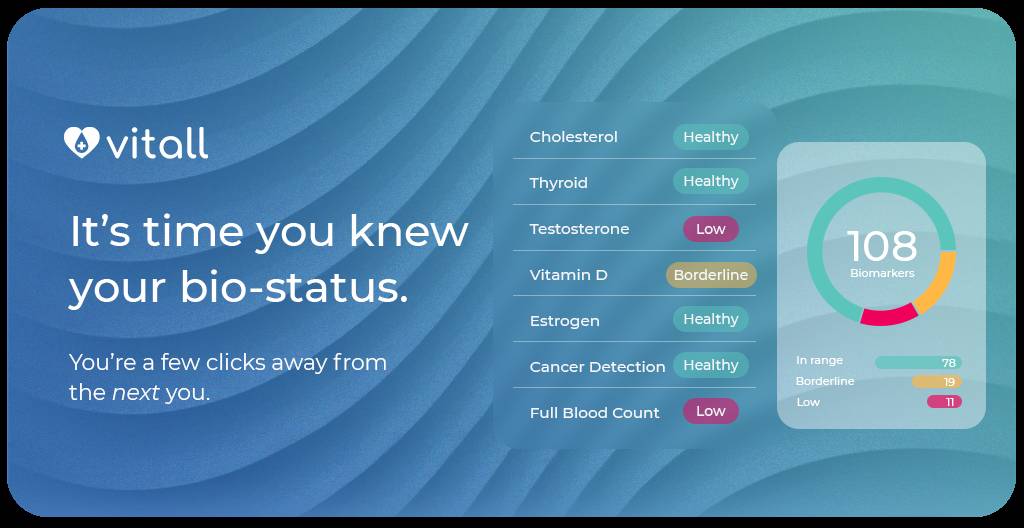
January Fatigue Isn’t a Mindset Problem
It’s Often a Bio-Status Problem
Motivation won’t fix a depleted nutrient status.
Positive thinking won’t rebalance hormones.
Another coffee won’t resolve underlying inflammation.
But data will.
When you understand what’s actually happening inside your body, fatigue stops being vague and frustrating and starts becoming actionable.
This is where bio-status matters.
Stop Guessing. Check Your Bio-Status.
If January has left you feeling flat, foggy or running on fumes, the most powerful next step isn’t another productivity hack.
It’s information.
A comprehensive total health check can reveal:
- Vitamin and mineral deficiencies
- Thyroid function
- Blood sugar control
- Inflammatory markers
- Hormonal patterns linked to stress and energy
When you stop guessing, you stop blaming yourself.
And when you know your bio-status, you can actually do something about it.
Stop guessing.
Check your bio-status.
Get Yourself Tested With Vitall's Home Test Kits







Scientific review

Dr. Kate Bishop
Chief Scientific Officer - Vitall|Profile
Reviewed on 21/01/2026
Next review due 21/01/2027
Review focus: Blood biomarkers, laboratory testing methodology, and biochemical interpretation.
More Articles in This Category
Similar Articles
View all articles ›How Nutritional Deficiencies Impact Anxiety and Mental Health
UK Statistics On Vitamin & Mineral Deficiency 2023
Vitamin B12 Deficiency–Causes And Symptoms
The Role of Vitamins and Minerals in Immune Function
How Important is Calcium?
The Ultimate Guide to Vitamin Deficiency in the UK: Symptoms, Causes, Tests & Solutions
The Role of Vitamins and Minerals in Immune Function
Mastering Magnesium: Balance Your Diet for Better Health
Could Your Sugar-Free Beverages Impact Insulin Resistance and Alter Your Gut Health?
Workouts: The Natural Mood Boosters Replacing Antidepressants
References & Citations For Here's Why You're so Exhausted - Scientifically Speaking
- American Diabetes Association (2020). Standards of Medical Care in Diabetes. Diabetes Care, 43(Suppl 1), S1–S212.
- Camaschella, C. (2015). Iron-deficiency anaemia. The New England Journal of Medicine, 372(19), 1832–1843.
- He, S., et al. (2019). Alcohol consumption and sleep quality. Nature and Science of Sleep, 11, 257–265.
- Ludwig, D.S., et al. (2018). Dietary carbohydrates and energy balance. The BMJ, 361, k2340.
- O’Leary, F. & Samman, S. (2010). Vitamin B12 in health and disease. Nutrients, 2(3), 299–316.
- Peeters, R.P. (2017). Subclinical hypothyroidism. The Lancet Diabetes & Endocrinology, 5(6), 492–506.
- Public Health England (2016). Vitamin D and Health. London: PHE.
- Van Dongen, H.P.A., et al. (2003). The cumulative cost of additional wakefulness. Sleep, 26(2), 117–126.
