
Liver Function Home Test Kit
Assess liver damage and your risk from liver disease

Liver Function Home Test Kit
Finger-prick blood home test kit, clinic visit or home nurse visit

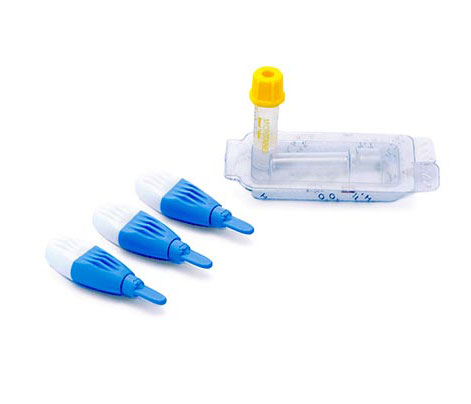
Collect your sample easily from home
Liver Function Home Test Kit
Finger-prick blood home test kit, clinic visit or home nurse visit



Liver Function Home Test Kit
Assess liver damage and your risk from liver disease
£59.00
Includes FREE delivery!
Your liver gets on with the job quietly, until fatigue, routine results, regular alcohol, extra weight, medicines, or family history make you want a clearer answer.
The Liver Function test measures a set of common blood markers linked to liver health and bile flow, including ALT, ALP, GGT, bilirubin, albumin, total protein, and globulins. It can help indicate inflammation or possible obstruction, and gives you a baseline to compare over time.
If you want objective data you can act on and track, order your Liver Function test today.
How would you like to take your test?
How would you like to take your test?






What the Liver Function test is for
The liver plays a complex role in the body including the metabolism of drugs and toxic substances, management of blood sugar levels, vitamin storage and maintaining hormonal balance.
Also know as Liver Function Tests, multiple biochemical tests are used to detect the presence of liver disease and other liver disorders.
Fortunately, the liver has an incredible capacity to regenerate, and can respond well to healthy lifestyle changes.
Liver Function Tests are also useful in detecting the response to lifestyle changes. For example, if abnormal liver function tests have compelled you to make a change in your life such as reducing the amount of alcohol consumption or reducing your weight, then you can repeat the tests to assess the effectiveness of these changes.
Small changes,
informed by
real data,
compound fast
Find out where to start...
What's included in your test?

The following sample guidance is required for this test, please follow carefully:
- One easy self-collection sample
- Your sample should be collected in the morning in a fasted state: i.e. without eating or drinking anything except water for 8 - 12 hours beforehand.
Get tested fast with a home test kit, using a finger-prick blood sample. Collect easily with no needles, with free priority postage to an accredited laboratory.
You can also opt for a clinic visit, for professional sample collection by experienced staff, in a comfortable & caring environment.
This Liver Function test measures the following biomarkers to assess liver damage and your risk from liver disease.

Specialist Tests
Need more details?
Learn how the self collection process works, what's in the kit, and your options for clinic and home nurses visits.
How this works ›Why take the Liver Function test?
This test is suited to you if you want a clear baseline for liver health and bile flow, or if you are monitoring a change that could affect the liver such as reducing alcohol, managing weight, or reviewing medicines.
Consider it if you drink regularly or binge drink, have a high BMI, do little exercise, feel persistently fatigued, or have a family history of liver disease or diabetes.
It can also be useful if you have had gallstones, live with gastrointestinal conditions such as IBS, have PCOS, have an eating disorder, take medicines that can stress the liver including excess paracetamol, ibuprofen or aspirin, or use performance-enhancing drugs such as steroids or creatine.
- Are anorexic or bulimic or suffer from another eating disorder
- Are overweight or obese (have a high BMI)
- Are taking medications that cause toxic liver disease, which includes too much paracetamol, ibuprofen & aspirin
- Don't do much exercise or lead a sedentary lifestyle
- Drink alcohol regularly or are a binge drinker
- Have family history of liver disease
- Have had gallstones
- Have had gastrointestinal disease (e.g. IBS)
- Have immediate family with history of diabetes
- Have polycystic ovary syndrome
- Suffer from chronic fatigue & tiredness
- Take performance enhancing drugs, including steroids and creatine
Order your Liver Function test and get the insights you need to feel your best.
Medical disclaimer: This test provides health information and is not a substitute for clinical assessment, diagnosis or treatment. Results should be considered alongside your symptoms, medical history and any medicines you take. If you are concerned about your results or your health, speak to a qualified healthcare professional. For urgent concerns, contact NHS 111, your GP, or call 999 in an emergency.
Expert Analysis In An Accredited Laboratory
Once your sample reaches the UKAS-accredited lab, the magic begins. But this isn't simple science – we insist on state-of-the-art automated technology to ensure your results are processed with unmatched accuracy and efficiency.
- UKCA marked test kits for full regulatory compliance.
- IVDD certified diagnostics for total quality reassurance.
- Medically led UKAS accredited laboratory testing for accurate results.



Dr. Kate Bishop
Chief Scientific Officer
"All testing is conducted by healthcare professionals in a medically-led laboratory. Accredited lab testing is the best way to be confident that your test results are accurate. Get tested now for complete reassurance."
Delivery and results
The Liver Function test offers a Finger-prick blood home test kit, clinic visit or home nurse visit for sample collection. Kits are posted to your home free of charge.
Easily sampling from home or at a clinic offers you the most convenient and stress-free way to get tested. Your test also includes free 24 hour tracked sample return to the laboratory.

1. Order Your Test

2. Post Your Samples

3. Get Your Results
Alanine Aminotransferase (ALT) is an enzyme mainly found in your liver. ALT is used by your body to break down food into energy, with levels in the blood normally low.
Following liver damage, the levels of ALT in your blood will rise making it a useful means to indicate liver problems.
Fluctuation of ALT levels is normal over the course of the day, and can also increase in response to strenuous physical exercise.
| Test | Result | Reference | Status |
|---|---|---|---|
| Alanine Aminotransferase | 50IU/L | 10 - 50 | Borderline High |
50 Alanine Aminotransferase (ALT) is an enzyme mainly found in your liver. ALT is used by your body to break down food into energy, with levels in the blood normally low. Following liver damage, the levels of ALT in your blood will rise mak | |||
| Albumin | 48g/L | 34 - 50 | Normal |
| Bilirubin | 6umol/L | 0 - 20 | Normal |
| Alkaline Phosphatase | 71IU/L | 40 - 129 | Normal |
| Gamma-Glutamyl Transferase | 35IU/L | 10 - 71 | Normal |
| Globulins | 27g/L | 19 - 35 | Normal |
| Total Protein | 75g/L | 63 - 83 | Normal |
| Total Protein | 73g/L | 60 - 80 | Normal |

Traffic Light System Instantly see which health markers are in a healthy range (green), borderline (yellow), or need attention (red).

Detailed Explanations Each marker includes an overview of its role in your body, what it means to have high or low levels, and actionable tips to improve.
Tracked Changes See how your health markers have changed over time, track your progress, and optimise your health.

Expert Guidance We don't just hand over data – we empower you with insights to make informed decisions about your health.
What happens after your results?

Testing shows where you are today. Prevent helps you focus on where you want to be.

Using your test results, metrics and symptoms, you can gain further insights to achieve your health goals.

Connect with expert medical partners focused on helping you achieve better health.

We are highly selective over who we choose to work with, so you can be confident you are in good hands.
What people say about this test

Pete
Hannah
Mark
Frequently Asked Questions
- Trefts E, Gannon M, Wasserman DH. The liver. Curr Biol. 2017;27(21):R1147-R1151. doi:10.1016/j.cub.2017.09.019. Accessed 23 June 2021. Available from: https://doi.org/10.1016/j.cub.2017.09.019
- Le J. Drug Metabolism. Accessed 23 June 2021. Available from: https://www.msdmanuals.com/professional/clinical-pharmacology/pharmacokinetics/drug-metabolism#v50215772
- Hamoud AR, Weaver L, Stec DE, Hinds TD Jr. Bilirubin in the Liver-Gut Signaling Axis. Trends Endocrinol Metab. 2018;29(3):140-150. doi:10.1016/j.tem.2018.01.002. Accessed 23 June 2021. Available from: https://doi.org/10.1016/j.tem.2018.01.002
- Nguyen-Lefebvre AT, Horuzsko A. Kupffer Cell Metabolism and Function. J Enzymol Metab. 2015;1(1):101. Accessed 23 June 2021. Available from: http://www.ncbi.nlm.nih.gov/pmc/articles/pmc4771376/
- Cocciolillo, S., Sebastiani, G., Blostein, M., & Pantopoulos, K. (2020). Liver Hormones. Hormonal Signaling in Biology and Medicine, 425–444. doi: 10.1016/b978-0-12-813814-4.00018-3. Accessed 23 June 2021. Available from: https://doi.org/ 10.1016/b978-0-12-813814-4.00018-3
- Heinz S, Braspenning J. Measurement of Blood Coagulation Factor Synthesis in Cultures of Human Hepatocytes. Methods Mol Biol. 2015;1250:309-316. doi:10.1007/978-1-4939-2074-7_23. Accessed 23 June 2021. Available from: https://doi.org/10.1007/978-1-4939-2074-7_23.
- British Liver Trust. Liver blood tests (formally known as liver function tests - LFTs). Accessed 24 June 2021. Available from: https://britishlivertrust.org.uk/information-and-support/living-with-a-liver-condition/liver-blood-tests/
- Woreta TA, Alqahtani SA. Evaluation of abnormal liver tests. Med Clin North Am. 2014;98(1):1-16. doi:10.1016/j.mcna.2013.09.005. Accessed 23 June 2021. Available from: https://doi.org/10.1016/j.mcna.2013.09.005
- Phillips J, Henderson AC. Hemolytic Anemia: Evaluation and Differential Diagnosis. Am Fam Physician. 2018 Sep 15;98(6):354-361. PMID: 30215915.
- Almasaudi AS, Dolan RD, Edwards CA, McMillan DC. Hypoalbuminemia Reflects Nutritional Risk, Body Composition and Systemic Inflammation and Is Independently Associated with Survival in Patients with Colorectal Cancer. Cancers (Basel). 2020;12(7):1986. Published 2020 Jul 21. doi:10.3390/cancers12071986. Accessed 24 June 2021. Available from: https://doi.org/10.3390/cancers12071986
- Limdi JK, Hyde GM. Evaluation of abnormal liver function tests. Postgrad Med J. 2003;79(932):307-312. doi:10.1136/pmj.79.932.307. Accessed 27 June 2021. Available from: https://doi.org/10.1136/pmj.79.932.307
- Public Health England. Liver disease: applying All Our Health. Accessed 26 June 2021. Available from: https://www.gov.uk/government/publications/liver-disease-applying-all-our-health/liver-disease-applying-all-our-health
- Rocco A, Compare D, Angrisani D, Sanduzzi Zamparelli M, Nardone G. Alcoholic disease: liver and beyond. World J Gastroenterol. 2014;20(40):14652-14659. doi:10.3748/wjg.v20.i40.14652. Accessed 23 June 2021. Available from: https://doi.org/10.3748/wjg.v20.i40.14652
- British Liver Trust. The alarming impact of liver disease in the UK Facts and statistics. Accessed 26 June 2021. Available from: https://www.britishlivertrust.org.uk/wp-content/uploads/The-alarming-impact-of-liver-disease-FINAL-June-2019.pdf
- National Health Service (NHS). Hepatitis A vaccination. Accessed 26 June 2021. Available from: https://www.nhs.uk/conditions/hepatitis-a/vaccination/
- NHS. Hepatitis B vaccine. Accessed 26 June 2021. Available from: https://www.nhs.uk/conditions/vaccinations/hepatitis-b-vaccine
- British Liver Trust. Looking after your liver. Accessed 26 June 2021. Available from: https://britishlivertrust.org.uk/information-and-support/liver-health-2/love-your-liver/looking-after-your-liver/
- Macken L, Gelson W, Priest M, et al. Efficacy of direct-acting antivirals: UK real-world data from a well-characterised predominantly cirrhotic HCV cohort. J Med Virol. 2019;91(11):1979-1988. doi:10.1002/jmv.25552. Accessed 27 June 2021. Available from: https://doi.org/10.1002/jmv.25552
- Medicines and Healthcare products Regulatory Agency. Direct-acting antivirals to treat chronic hepatitis C: risk of interaction with vitamin K antagonists and changes in INR. Accessed 27 June 2021. Available from: https://www.gov.uk/drug-safety-update/direct-acting-antivirals-to-treat-chronic-hepatitis-c-risk-of-interaction-with-vitamin-k-antagonists-and-changes-in-inr
Cirrhosis is commonly called “end-stage liver disease” and is mistakenly believed to be irreversible. While the scarring tissue will not disappear on its own, the liver may improve its functions once the damaging factor is removed.[12] Therefore, people with liver damage will also benefit from avoiding alcohol and having a healthy lifestyle. Preventing viral hepatitis is extremely important: patients with liver disease are recommended to get vaccinated against hepatitis A and B if they have not become infected in the past.
People with liver damage caused by hepatitis C, if indicated, may receive treatment with direct-acting antivirals (boceprevir, daclatasvir, dasabuvir, etc.). A study from the United Kingdom, which included patients with cirrhosis, found the overall curative efficacy of these treatments to be around 91%.[18] If you receive warfarin or other vitamin K antagonists, you should inform your physician before receiving direct-acting antivirals.[19]
When managing an existing condition or attempting to reverse damage, you can monitor improvements using a liver test at home.
It can take 20 years for chronic liver damage to produce detectable symptoms; considering this, action must be taken early. Check your health first using a liver blood test kit to highlight concerns. Most cases of liver disease can be prevented through accessible methods: hepatitis prevention and a healthy lifestyle.[14]
- Viral hepatitis:
- Hepatitis A vaccine is not routinely administered in the UK. It is recommended for people with chronic liver disease, high-risk workers, or those planning to travel to regions with high infection rates.[15]
- Hepatitis B vaccine is included in the 6-in-1 vaccine offered to babies in the UK (August 2017 onwards). Your GP may vaccinate you if you consider you require the vaccine.[16]
- Aside from vaccines, viral hepatitis is prevented by not sharing drug equipment, razors, and toothbrushes, using condoms during sex, and avoiding unlicensed tattoo or piercing studios.[17]
- Lifestyle:[17]
- Limit alcohol to 14 units per week. The fewer drinks the better.
- Try to have at least 3 alcohol-free days in a row per week.
- Exercise.
- Have a balanced diet.
Alcohol is one of the most important risk factors for disease and disability in general. This statement holds especially true for its main victim, the liver, which is the organ most responsible for metabolising ethanol. Alcohol, as well as its metabolites (by-products), act as hepatotoxins capable of directly damaging the liver. For example, acetaldehyde triggers inflammation and fibrosis; it is also capable of binding to proteins and DNA from liver cells, which may trigger immune responses against the hepatic tissues.[13]
Alcohol also damages the liver indirectly through multiple mechanisms. It acts synergistically with the human immunodeficiency virus (HIV) and hepatitis viruses B and C. Alcohol also promotes alcohol-related liver damage in patients with haemochromatosis and non-alcoholic fatty liver. The oesophagus, stomach, intestines, and pancreas are damaged by alcohol too, disrupting gastrointestinal function and, indirectly, damaging the liver.[13]
a) Early warnings
- Loss of appetite.
- Unwanted or unexplained loss of weight.
- Loss of muscular mass.
- Feeling tired, weak, or ill most of the time.
- Nausea and vomiting.
- Tenderness, discomfort, or pain in the liver area (upper right side of the abdomen).
- Sleeping disorders.
- Reddened skin on the palms.
b) Symptoms of liver disease
- Swelling of the lower limbs (legs, ankles, and feet) and abdomen (ascites).
- Hair loss.
- Yellowed skin and mucous membranes, such as the white of the eye or inside the mouth (jaundice).
- Alteration of sexual characteristics, such as enlarged breasts in men and irregular menstrual cycles in women.
- Lowered sexual desire (libido).
- Itchy skin.
- Frequent bruising.
- Bleeding disorders, such as nosebleeds or prolonged bleeding.
- Darkened urine and pale stools.
c) Severe signs and symptoms
- Vomiting blood.
- Shortness of breath.
- Black stools.
- Confusion.
- High fever.
Despite being the body’s largest solid organ and performing multiple vital functions, the purpose of the liver is commonly misunderstood. Among its primary functions, the liver has to manage macronutrients (carbohydrates, proteins, and fat), representing a critical hub for lipid and cholesterol metabolism; however, it’s capable of much more.[1]
The liver can be seen as the body’s factory: it takes the major components of your diet and turns them into a readily available energy source or integrates them into an accessible storage system. Upon feeding, the liver favours the conversion of glucose to glycogen, lipids to fatty tissue, and amino acids to proteins (albumin and globulins). Furthermore, the liver is essential for the intestinal absorption of lipids (including fat-soluble vitamins like vitamin A, D, E, and K)[1] and represents the primary site for the metabolism of various drugs[1][2] and body substances, such as bilirubin.[3]
The immune and endocrine systems are linked to the liver, too. It has its own immune cells (Kupffer cells)[4] and produces the hormones angiotensinogen (blood pressure regulator), hepcidin (controls iron metabolism), insulin-like growth factors (growth and metabolism controller), and thrombopoietin (promotes platelet production).[5] Finally, the liver regulates the production of blood coagulation factors, a vital function that allows the uninterrupted flow of blood to every organ.[6]
Given this complex functionality, assessing liver health requires a blood test, which can be conducted using a liver test at home.
The normal range is the term used for the range of liver function test values seen in 95% of the healthy population. The exact values may depend on your age, sex and the laboratory used for your liver function blood test.
- Normal levels of albumin and globulins say a lot about good protein production in the liver, but they also mean that the body is receiving the right amount and variety of amino acids (from dietary protein) to build up albumin, globulins, and other hepatic proteins.[1]
- Bilirubin is kept at a normal range thanks to the liver. A normal bilirubin value depends on good blood flow in and out of the liver, adequate liver function, and unobstructed bile flow out of the liver.[8]
- Aminotransferases and ALP can be detected if liver cells are injured or destroyed. The levels detected in normal ranges are expected due to normal cellular turnover
However, these values do not blindly translate into good liver health without exceptions: if you are presenting signs, symptoms, or other findings that are attributable to liver disease, further medical assistance may be required.
Abnormal liver function, as reflected by altered liver function tests, means that the liver is:[11]
- Unable to properly process and/or excrete bilirubin.
- Unable to produce and maintain the free flow of bile.
- Unable to properly synthesise proteins.
- Unable to maintain hepatic cellular integrity.
However, having abnormal results do not necessarily signify liver disease. In some situations, the liver has to work harder than usual and some values may be abnormal. For example, many drugs (antibiotics, non-steroidal anti-inflammatory drugs, statins, antiepileptics, etc.) may slightly alter these values, especially aminotransferases and bilirubin.[11] To consider these changes benign, they must be mild, asymptomatic, and reversible.
Liver function is commonly tested through biochemical markers that provide a valuable and efficient overview of the organ; in other words, they are useful for the diagnosis and management of liver health or disease.
Liver blood tests usually encompass alanine aminotransferase (ALT), gamma-glutamyl transferase (GGT), alkaline phosphatase (ALP), bilirubin, albumin (ALB), globulins, and total protein (TP). Liver function tests may exclude some of these markers while including others, such as aspartate aminotransferase (AST) or coagulation times (prothrombin time and partial thromboplastin time).[7]
In general, liver function tests at home shed some light on a few subjects:
- Aminotransferases (ALT, GGT, AST) and ALP are useful for identifying liver injury. These markers are commonly found inside hepatocytes (liver cells), especially in the case of ALT.[8]
- Hepatic proteins (albumin, globulins, total protein) are indirect markers of protein production in the liver.[8]
- Bilirubin is a pigment derived from the breakdown of heme-containing proteins, such as haemoglobin. It is useful for determining hepatic clearance.[8]
Liver disease refers to any condition characterised by acute or chronic liver damage, making it unable to function properly. The presence of liver disease following abnormal liver function can often be identified using a liver home test kit.
It can be caused by a wide variety of factors, from alcohol consumption or unhealthy lifestyles to viruses or autoimmune disorders. As the damage persists over time, these conditions progress towards hepatic cirrhosis, which is marked by the formation of scar tissue (fibrosis).
The most common causes of liver disease are:[12]
- Primary liver cancer, commonly a consequence of chronic liver disease.
- Non-alcoholic fatty liver disease, which is related to obesity and metabolic syndrome.
- Alcoholic-related fatty liver disease, caused by regular and excessive alcohol intake.
- Viral hepatitis, caused by becoming infected with hepatitis-causing viruses, such as hepatitis A, B, C, D, and E.
- Autoimmune liver disease, which occurs when the immune system mistakenly attacks the liver.
Taking a liver function test at-home is not only a more convenient option but also can be a safer one. At-home blood testing opens the doors to patient-centric care, allowing people to take control of their health. Since its introduction, at-home testing has served an important role in early diagnosis and disease monitoring, enabling patients and doctors to act and plan in a timely manner.
A liver test home kit is excellent for a rapid health check or convenient monitoring. Viral hepatitis, alcohol-related liver disease, and non-alcoholic fatty liver disease are common conditions that are routinely investigated and followed with the help of liver function home tests.
Some extrahepatic diseases can be suspected or supervised through these tests; for instance, bilirubin is commonly ordered in cases of suspected haemolytic anaemia[9] and albumin is employed during the assessment of nutritional risk in various populations, including the elderly and patients with cancer.[10]
Home test kits contain full instructions and everything you need to safely collect and return your sample. Please see the following details relating to this test below:
- One easy self-collection sample
- Your sample should be collected in the morning in a fasted state: i.e. without eating or drinking anything except water for 8 - 12 hours beforehand.
We also have a guide on how to collect a high quality sample which you may find useful.
The Vitall Liver Function test is available online for just £59.00. Your home test kit will be dispatched by free first class post for delivery to your door.
For the best value testing you can also upgrade this Liver Function home test to tests which also measure other biomarkers, including:
- Core Lifestyle - Maintain a healthy lifestyle by targeting your cholesterol levels and liver function.
- Damage Control - Target the big three lifestyle risk factors - diabetes, heart disease and liver disease.
- Male Total Health Check - Test your whole body as a system to understand and master your health. This all in one health test targets male lifestyle risks to put you in control..
- Female Total Health Check - Take a whole body holistic view of female health risks. This all round health test provides the reassurance needed for a healthier you!.
When you checkout to buy your Liver Function test online we also offer additional options, including:
- Visit the Patient Reception in central London for just £35. Your Liver Function test sample can be collected by a qualified nurse for immediate analysis.
- Have a nurse visit you to collect the sample for your Liver Function test, this is nationwide for just £79.
Whichever option you choose at checkout, buying the best Liver Function test online in the UK with Vitall ensures high quality results from an accredited laboratory.
Take control of your health today with one of Vitall’s home blood tests.
Upgrades For The Liver Function Test








Articles About Liver Function Testing
View all articles ›Longevity for Women in Their 40s: The Biomarkers That Matter Most
Long-Term Effects of Stress and High Cortisol on Health
From Taboo to Trend: The Rise of Injectable Peptides, Steroids and ‘Optimisation’
Why You're Unable to Lose Weight (Despite Trying)
Why Food Matters More on GLP-1s Than Most People Expect
Glutathione: The Master Antioxidant Keeping Your Cells in Check
Let's Talk About It: The Life-Saving Health Tests Every 40 Year Old Man Should Have
All About Your Liver Function
How Can I Keep My Liver Healthy?
Clinical review

Dr. Shahzaib Ahmad MBBS, BSc, MRCP, FRCA, FFICM
Clinical Supervisor - Vitall|GMC 7495062|Profile
Reviewed on 06/08/2026
Next review due 06/08/2027
Review focus: Blood biomarkers, laboratory testing methodology, and biochemical interpretation.
£59.00
