
Inflammation (CRP) Home Test Kit
Identify the presence of inflammation & its severity

Inflammation (CRP) Home Test Kit
Finger-prick blood home test kit, clinic visit or home nurse visit


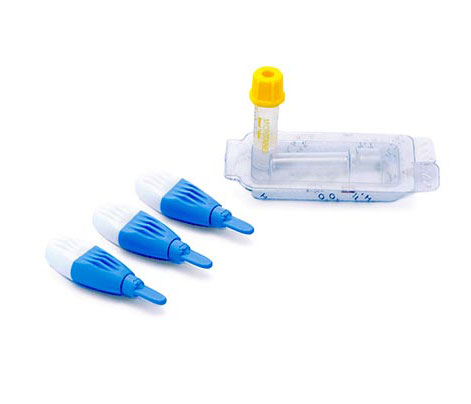
Collect your sample easily from home
Inflammation (CRP) Home Test Kit
Finger-prick blood home test kit, clinic visit or home nurse visit



Inflammation (CRP) Home Test Kit
Identify the presence of inflammation & its severity
£59.00
Includes FREE delivery!
Sometimes you feel “off” without a clear symptom, or you are recovering from an illness and want a clearer view of what is happening inside your body. Relying on how you feel can be misleading, especially when inflammation rises before obvious signs appear.
This test measures C-reactive protein (CRP), a protein made by the liver that increases in the blood with inflammation. CRP can rise early in infection, tissue injury, or other inflammatory processes, sometimes before pain or fever. A raised result can indicate that further investigation may be needed, and it can also help track whether inflammation is settling with treatment.
If you want objective data to support your next step, order the Inflammation (CRP) test and get a clear baseline you can act on.
How would you like to take your test?
How would you like to take your test?






What the Inflammation (CRP) test is for
This test measures for C-reactive protein (CRP), a protein made by the liver and released into the blood after the start of an infection, tissue injury or other inflammation.
It is often the first evidence of inflammation or infection in the body, before pain, fever or other clinical indicators.
High levels of CRP can indicate that further testing and treatment may be necessary, for example to identify if a chronic inflammatory condition is present.
This test can also be used to assess efficacy of treatment - for example if you are taking antibiotics - this test can be used to assess if inflammation is settling which would suggest that the infection is getting better.
Small changes,
informed by
real data,
compound fast
Find out where to start...
What's included in your test?

The following sample guidance is required for this test, please follow carefully:
- One easy self-collection sample
Get tested fast with a home test kit, using a finger-prick blood sample. Collect easily with no needles, with free priority postage to an accredited laboratory.
You can also opt for a clinic visit, for professional sample collection by experienced staff, in a comfortable & caring environment.
This Inflammation (CRP) test measures the following biomarkers to identify the presence of inflammation & its severity.

Specialist Tests
Need more details?
Learn how the self collection process works, what's in the kit, and your options for clinic and home nurses visits.
How this works ›Why take the Inflammation (CRP) test?
This test is suited to people who want an objective check for infection or inflammation when symptoms are unclear, or when you suspect a bacterial or viral infection.
It is also useful if you are at higher risk of chronic inflammatory disease, have bowel disorders, or have a high BMI and want a clearer baseline to discuss with a clinician.
You may take it to monitor whether anti-inflammatory treatment is working and whether inflammation appears to be settling over time.
- Are at risk from chronic inflammatory diseases
- Are at risk or have suffered from bowel disorders
- Are overweight or obese (have a high BMI)
- Think you may have a bacterial or viral infection
- Want to assess if anti-inflammatory treatment is working
- Want to check your body for infection or inflammation
Order your Inflammation (CRP) test and get the insights you need to feel your best.
Medical disclaimer: This test provides health information and is not a substitute for clinical assessment, diagnosis or treatment. Results should be considered alongside your symptoms, medical history and any medicines you take. If you are concerned about your results or your health, speak to a qualified healthcare professional. For urgent concerns, contact NHS 111, your GP, or call 999 in an emergency.
Expert Analysis In An Accredited Laboratory
Once your sample reaches the UKAS-accredited lab, the magic begins. But this isn't simple science – we insist on state-of-the-art automated technology to ensure your results are processed with unmatched accuracy and efficiency.
- UKCA marked test kits for full regulatory compliance.
- IVDD certified diagnostics for total quality reassurance.
- Medically led UKAS accredited laboratory testing for accurate results.



Dr. Kate Bishop
Chief Scientific Officer
"All testing is conducted by healthcare professionals in a medically-led laboratory. Accredited lab testing is the best way to be confident that your test results are accurate. Get tested now for complete reassurance."
Delivery and results
The Inflammation (CRP) test offers a Finger-prick blood home test kit, clinic visit or home nurse visit for sample collection. Kits are posted to your home free of charge.
Easily sampling from home or at a clinic offers you the most convenient and stress-free way to get tested. Your test also includes free 24 hour tracked sample return to the laboratory.

1. Order Your Test

2. Post Your Samples

3. Get Your Results
C-reactive Protein (CRP) is a non-specific marker that can indicate the presence of infection and inflammation. It is protein that is part of the innate immune response.
The high sensitivity test can also be used to assess cardiovascular disease risk, as cardiovascular disease is associated with chronic inflammation and CRP levels can be used to track inflammation.
| Test | Result | Reference | Status |
|---|---|---|---|
| C-reactive Protein | 0.6mg/L | <5.0 | Normal |
0.6 C-reactive Protein (CRP) is a non-specific marker that can indicate the presence of infection and inflammation. It is protein that is part of the innate immune response. | |||

Traffic Light System Instantly see which health markers are in a healthy range (green), borderline (yellow), or need attention (red).

Detailed Explanations Each marker includes an overview of its role in your body, what it means to have high or low levels, and actionable tips to improve.
Tracked Changes See how your health markers have changed over time, track your progress, and optimise your health.

Expert Guidance We don't just hand over data – we empower you with insights to make informed decisions about your health.
What happens after your results?

Testing shows where you are today. Prevent helps you focus on where you want to be.

Using your test results, metrics and symptoms, you can gain further insights to achieve your health goals.

Connect with expert medical partners focused on helping you achieve better health.

We are highly selective over who we choose to work with, so you can be confident you are in good hands.
What people say about this test

Callum
Hannah
Mark
Frequently Asked Questions
As mentioned above, a high CRP blood test result could indicate a variety of underlying health conditions, some of which are more serious than others. Therefore, in most cases, CRP in itself is not harmful to your body as it is not the cause of the problem, but rather it is produced as a result of the health issue you may have.
CRP actually has a protective role in your body against a variety of harmful agents such as a viral or bacterial infection, contributing to immune function. Typically, CRP values are much more elevated when it comes to a bacterial infection compared to a viral infection. This makes CRP a good biomarker for deciding whether doctors should prescribe antibiotics or not.
There are however cases where CRP can be the indicator of a more serious condition. Having elevated CRP levels can increase the risk of having a heart attack by a factor of 3. CRP levels correlate to having a greater risk of cardiovascular diseases and cholesterol levels. Values above 3 mg/L mean you are at a greater risk of developing heart disease.
C-reactive protein test results exceeding 10 mg/L generally indicate a more significant inflammation which is not necessarily due to infection (such as autoimmune diseases), and values above 100 mg/L usually indicate very serious infections such as a bone infection, pneumonia, or even cancer (8-14).
Take the Vitall CRP test to measure your C-reactive protein levels and assess the degree of inflammation in your body.
To test your CRP levels, you can either order the Inflammationor the Arthritis home test kit online and you will receive the test in the post. All you have to do is simply prick your finger to draw blood using the fingerprick lancet provided in the kit, then send the sample to the laboratory in the envelope provided to you. The sample will be expertly analysed, and the results sent to you online usually within 24 hours.
Bear in mind that some medications such as aspirin, celecoxib, statins, clopidogrel, ramipril, and captopril can decrease your CRP levels. On the other hand, antidepressants such as sertraline, fluoxetine, citalopram, escitalopram, paroxetine, and fluvoxamine can increase your CRP levels.
Some experts recommend routinely checking your CRP level at the same time you check for your cholesterol levels. If you are suffering from heart disease, or if you smoke, have diabetes, have high cholesterol levels, high blood pressure, or are overweight, you should frequently check your CRP.
It is recommended you take two tests two weeks apart and use the average as your indicator to monitor the evolution of your cardiac health. Your GP can also ask you to take CRP tests at different frequencies depending on your age, overall health, specific conditions, and the medication you take. Always consult your GP if your CRP is too high or if you start experiencing new symptoms (20).
Recent studies have shown that a continuous low level of inflammation increases the build-up of cholesterol and other lipids on the wall of your blood vessels, causing your blood vessels to narrow. This condition is known as atherosclerosis, and it is a well-established risk factor and precursor for numerous cardiovascular diseases. A low level of continuous inflammation caused by such a condition can lead to low levels of CRP in the bloodstream, with CRP values falling between 0.5 to 10mg/L.
These lower range values of CRP must be measured very accurately, and this is where HS-CRP comes in. The standard CRP test measures levels within the range of 10 to 1000 mg/L and is suited to measuring high levels of CRP, whereas HS-CRP (High Sensitivity C-Reactive Protein) has an increased sensitivity for measuring very low levels of CRP which cannot be detected in the typical CRP test.
While several factors such as high cholesterol, body weight, and high blood pressure have been directly linked to cardiovascular conditions, you can still develop heart problems without having any of these conditions. HS-CRP testing enables you to predict the probability of developing cardiovascular disease whether you have risk factors or not.
Also, if you have slightly above-average levels of CRP, with or without risk factors, you could be at a higher risk of experiencing a cardiovascular event such as a heart attack or a stroke. These levels of CRP cannot be detected by standard CRP tests as it is not sensitive enough to detect such small increases in CRP. HS-CRP tests are able to accurately detect these increases and thus predict the risk of heart complications.
Experts recommend that you take the HS-CRP test and the cholesterol level tests to help your GP get a better picture of your overall cardiovascular health and more accurately assess your risk of developing cardiovascular disease or experiencing a cardiovascular event. Some guidelines recommend that you should take the HS-CRP test if you have no risk factor and are younger than 50 years if you are a man or younger than 60 of you are a woman, in order to assess the risk of developing heart problems.
HS-CRP levels can help your GP assess your cardiovascular risk:
- Low risk: less than 1.0 mg/L
- Average risk: 1.0 to 3.0 mg/L
- High risk: above 3.0 mg/L
Your HS-CRP test results can provide important information about your cardiovascular risk profile, but to get the most complete picture possible, it is highly recommended to test your glucose, triglyceride, and cholesterol levels.
You should be aware that certain medications, like statins, nonsteroidal anti-inflammatories drugs, and some hormones can significantly impact your CRP and HS-CRP levels. You should always discuss with your GP how the medication you take can alter the validity of the test results.
If you have chronic inflammation caused by conditions like autoimmune diseases, arthritis, or cancer, you should not take an HS-CRP test as the results will not be accurate.
In summary, the main difference between the standard CRP test and the HS-CRP is that the CRP test is more suited for you if you have conditions that cause chronic inflammation whereas the HS-CRP test is ideal for you if you have no cardiovascular risk factor and want to know the risk of developing serious heart problems (21-24).
High C-reactive protein (CRP) levels are not generally associated with viral infections, though moderately elevated CRP values (10–60 mg/L) are common in people who have a viral upper respiratory tract infection.
For example, COVID-19 patients have been shown to have elevated CRP levels. However, it should be noted that CRP blood tests are not recommended as a reliable alternative for COVID-19 testing.
In fact, CRP levels can help distinguish if you have a viral or bacterial infection. That is because the increase in blood levels of CRP is generally higher for bacterial infections, as CRP values can exceed 60 mg/L going up to 100 mg/L depending on the severity of the bacterial infection. Your GP can carry out a CRP test to determine whether you are more likely to be suffering from a viral or bacterial infection, in order to decide what treatment is more appropriate for you (11–18).
If you’re healthy and have no inflammatory health conditions, CRP will be present in your blood in very low concentrations. Now, imagine you came in contact with an inflammatory stimulus, for example by falling off your bike. Your immune system would trigger an inflammatory response which will, in turn, increase the levels of CRP in your body.
There are two types of inflammatory responses: acute and chronic inflammatory responses.
Acute inflammation is an immediate, adaptive response. It can be caused by stimuli such as microbial infection, tissue injury, response to surgery, or intense physical exercise.
Chronic inflammation, on the other hand, occurs when the inflammatory response triggered by your immune system is prolonged as your body is in a constant state of alert.
Causes of chronic inflammation include untreated infections or injuries, autoimmune conditions like lupus or rheumatoid arthritis, smoking, poor diet, obesity, stress, and alcohol consumption (1,4). This type of inflammation is believed to play a key role in the development of chronic illnesses such as heart disease and cancer.
In both acute and chronic inflammation, a CRP blood test will show C-reactive protein levels that can be interpreted based on the following:
- Less than 0.3 mg/dL: Normal (CRP blood level seen in most healthy adults).
- 0.3 to 1.0 mg/dL: Normal or minor elevation (can be seen in obesity, pregnancy, depression, diabetes, common cold, gingivitis, periodontitis, sedentary lifestyle, cigarette smoking, and genetic polymorphisms).
- 1.0 to 10.0 mg/dL: Moderate elevation (Systemic inflammation such as RA, SLE, or other autoimmune diseases, malignancies, myocardial infarction, pancreatitis, bronchitis).
- More than 10.0 mg/dL: Marked elevation (Acute bacterial infections, viral infections, systemic vasculitis, major trauma).
- More than 50.0 mg/dL: Severe elevation (Acute bacterial infections).
Keep in mind however that your CRP levels are subject to variability between individuals based on a wide range of physiological factors. For example, women tend to have on average higher inflammation levels (2.37mg/L) than men (1.76 mg/L).
A CRP blood test provides useful information as to the level of inflammation in your body and it is important to note that a rise in your CRP levels can be due to an underlying condition. The range of values presented above only indicates the potential underlying causes for an elevated CRP, but this cannot provide a conclusive explanation, as your GP will need to carry out more tests to have a full diagnosis. (1-7).
If your CRP blood test reports high CRP levels, you might have an infection that could be viral, bacterial, or fungal.
The infections that cause the most increase in CRP levels in your blood are tuberculosis, sepsis, pneumonia, osteomyelitis (bone infection), and heart infections (9).
Further blood tests and investigation are required to determine the cause.
In response to inflammation, CRP is produced and released by the liver. A CRP blood test measures the levels of CRP in the bloodstream. CRP tests can be used to either detect acute inflammation or monitor the evolution of a chronic disease.
C-reactive protein blood test results alone cannot be used by your GP to diagnose a condition, but it can alert your doctor that your body is experiencing an inflammatory reaction and that further tests might be necessary. This inflammatory reaction can have different causes, from infections to heart complications, autoimmune diseases, and cancerous growths.
There are two types of CRP blood tests: the standard CRP test that measures high levels of the protein caused by a significant degree of inflammation and the HS-CRP test (High Sensitivity CRP) that measures lower amounts of CRP and is used to assess the risk of developing cardiovascular problems (20).
C-reactive protein (CRP) is a protein produced by your liver that plays an important role in inflammatory processes. Inflammation is your body’s natural response to fighting off harmful stimuli such as an injury or pathogen (viruses, bacteria, toxins). Hence, inflammation is part of your body’s immune response.
If a foreign substance is recognized in the body, or an injury occurs, your immune system will trigger an immune response, leading to the release of chemicals and antibodies to help fight off the threat.
This is where CRP comes in. CRP, along with other agents contributing to host defence, are part of a survival mechanism that helps protect your body against harmful compounds and invaders.
The chemical structure of CRP is essential in its mechanism of action, as CRP is a pattern recognition molecule. This means it can bind to the specific molecular forms which are typically produced during cell death or found on the surfaces of microbes. In this way, CRP contributes to the recognition and removal of foreign pathogens and damaged cells in your body.
There are several ways CRP helps you discard unwanted compounds, for example, through the activation of phagocytic cells, a special type of immune cells (1-4).
Inflammatory markers, including C-reactive protein (CRP), erythrocyte sedimentation rate (ESR), and plasma viscosity (PV) are all commonly used blood tests for the detection and monitoring of inflammatory conditions, including infections, autoimmune conditions, and cancers. Rates of inflammatory marker testing are rising, with a consistent increase in testing rates for CRP over the past 15 years (19).
A research article published in 2019 compared the accuracies and precisions of CRP, ESR, and PV tests. The results showed that CRP tests had marginally better accuracy as infections were shown to have a more prominent increase in CRP levels compared to its effect on erythrocyte sedimentation or plasma viscosity, making it a better tool for detecting inflammation (19).
Home test kits contain full instructions and everything you need to safely collect and return your sample. Please see the following details relating to this test below:
- One easy self-collection sample
We also have a guide on how to collect a high quality sample which you may find useful.
The Vitall Inflammation (CRP) test is available online for just £59.00. Your home test kit will be dispatched by free first class post for delivery to your door.
When you checkout to buy your Inflammation (CRP) test online we also offer additional options, including:
- Visit the Patient Reception in central London for just £35. Your Inflammation (CRP) test sample can be collected by a qualified nurse for immediate analysis.
- Have a nurse visit you to collect the sample for your Inflammation (CRP) test, this is nationwide for just £79.
Whichever option you choose at checkout, buying the best Inflammation (CRP) test online in the UK with Vitall ensures high quality results from an accredited laboratory.
Take control of your health today with one of Vitall’s home blood tests.
Articles About Inflammation (CRP) Testing
View all articles ›Longevity for Women in Their 40s: The Biomarkers That Matter Most
Long-Term Effects of Stress and High Cortisol on Health
Mitochondrial Health, Exercise and Biological Ageing
Longevity Biomarkers: The Science of Measuring Your Future Healthspan
Wasted Wellness: How to Stop Paying Guesswork Tax on Your Health
Why You're Unable to Lose Weight (Despite Trying)
The Ultimate Anti-Inflammatory Lifestyle Guide: Diet, Supplements and Habits to Reduce Chronic Inflammation
Why Your Omega-6:3 Ratio Matters More Than You Think (Especially in the UK)
You’ve Had a Baby. Now Let’s Talk About What No One Told You (But Your Blood Will)
What They’re Not Telling You About Seed Oils
Clinical review

Dr. Shahzaib Ahmad MBBS, BSc, MRCP, FRCA, FFICM
Clinical Supervisor - Vitall|GMC 7495062|Profile
Reviewed on 05/08/2026
Next review due 05/08/2027
Review focus: Blood biomarkers, laboratory testing methodology, and biochemical interpretation.
£59.00
