
Cortisol (Stress) Home Test Kit
Check if your body is under stress or over-training

Cortisol (Stress) Home Test Kit
Finger-prick blood home test kit, clinic visit or home nurse visit


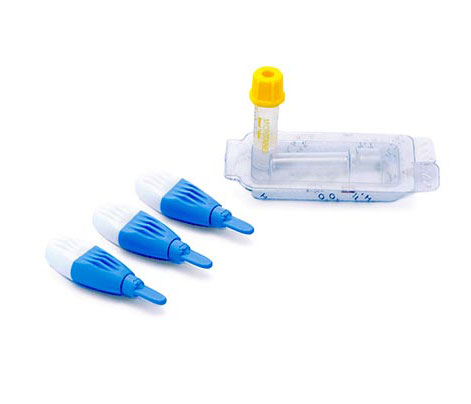
Collect your sample easily from home
Cortisol (Stress) Home Test Kit
Finger-prick blood home test kit, clinic visit or home nurse visit



Cortisol (Stress) Home Test Kit
Check if your body is under stress or over-training
£59.00
Includes FREE delivery!
When you feel tired but wired, wake too early, or struggle to recover after training, it is difficult to tell whether stress is driving the pattern or simply sitting alongside it. This test measures cortisol, the body’s main stress hormone, which can shift with illness, physical strain, emotional pressure, and changes to sleep.
Your result helps you see whether cortisol looks in range for the right clinical context, and whether it is worth discussing adrenal or pituitary function with a clinician. Timing matters because cortisol usually peaks in the morning, and shift work or irregular hours can change what “normal” looks like for you.
If you want a clear data point rather than guesswork, you can order the Cortisol (Stress) test today.
How would you like to take your test?
How would you like to take your test?






What the Cortisol (Stress) test is for
Cortisol is the main hormone involved in stress and can also be affected by physical stress, emotional stress, and illness.
It plays a role in numerous body functions including circulatory & nervous systems, digestion & your immune response.
This cortisol level test is used to check your cortisol production levels and as a way to assess the functioning of the adrenal and pituitary glands.
Rarely, the levels of the stress hormone Cortisol can be inappropriately low. This can be caused by a condition known as Addison's disease.
You can also use this test to assess response to therapy - for example if you are taking cortisol replacement (hydrocortisone).
This test sample should be collected betwen 06:00-10:00 in the morning, as this is when the hormone levels are usually highest.
Small changes,
informed by
real data,
compound fast
Find out where to start...
What's included in your test?

The following sample guidance is required for this test, please follow carefully:
- One easy self-collection sample
- Your sample should be collected between 6 - 10 a.m when cortisol levels will naturally be at their highest.
Get tested fast with a home test kit, using a finger-prick blood sample. Collect easily with no needles, with free priority postage to an accredited laboratory.
You can also opt for a clinic visit, for professional sample collection by experienced staff, in a comfortable & caring environment.
This Cortisol (Stress) test measures the following biomarkers to check if your body is under stress or over-training.

Specialist Tests
Need more details?
Learn how the self collection process works, what's in the kit, and your options for clinic and home nurses visits.
How this works ›Why take the Cortisol (Stress) test?
This test is for people who feel persistently tired, run down, or under strain and want an objective view of whether cortisol may be contributing.
It is also suited to those with symptoms that can be linked to cortisol imbalance, including rapid weight gain around the waist, low libido, erectile dysfunction, excessive body hair in women, or suspected Cushing’s syndrome.
If you have Addison’s disease, or you are monitoring cortisol in the context of treatment, this test provides a clear data point to support a clinician-led discussion.
- have a low sex drive & loss of libido
- Feel tired all the time with low energy
- Have Addison's disease
- Have been taking testosterone as part of hormone replacement therapy
- Have Cushing's syndrome
- Have erectile dysfunction
- Have excessive body hair (in women)
- Have experienced rapid weight gain, particularly around the waist
Order your Cortisol (Stress) test and get the insights you need to feel your best.
Medical disclaimer: This test provides health information and is not a substitute for clinical assessment, diagnosis or treatment. Results should be considered alongside your symptoms, medical history and any medicines you take. If you are concerned about your results or your health, speak to a qualified healthcare professional. For urgent concerns, contact NHS 111, your GP, or call 999 in an emergency.
Expert Analysis In An Accredited Laboratory
Once your sample reaches the UKAS-accredited lab, the magic begins. But this isn't simple science – we insist on state-of-the-art automated technology to ensure your results are processed with unmatched accuracy and efficiency.
- UKCA marked test kits for full regulatory compliance.
- IVDD certified diagnostics for total quality reassurance.
- Medically led UKAS accredited laboratory testing for accurate results.



Dr. Kate Bishop
Chief Scientific Officer
"All testing is conducted by healthcare professionals in a medically-led laboratory. Accredited lab testing is the best way to be confident that your test results are accurate. Get tested now for complete reassurance."
Delivery and results
The Cortisol (Stress) test offers a Finger-prick blood home test kit, clinic visit or home nurse visit for sample collection. Kits are posted to your home free of charge.
Easily sampling from home or at a clinic offers you the most convenient and stress-free way to get tested. Your test also includes free 24 hour tracked sample return to the laboratory.

1. Order Your Test

2. Post Your Samples

3. Get Your Results
Cortisol is your body's main stress hormone, influencing your mood, motivation, and fear.
The production and release of cortisol follows a circadian rhythm, highest in the early morning with several pulses throughout the day to the lowest levels in the evening.
This is called a diurnal rhythm and is clearly linked to daily activity patterns.
But cortisol is also released in high quantities in response to stress, to help the body respond appropriately, so high levels are a good indicator of this.
Although cortisol has an important role in driving your body's “fight-or-flight” instinct during a crisis, it also plays numerous other important roles on a daily basis. For example:
- Managing the use of key nutrients like fats, proteins and carbohydrates
- Controlling your sleep patterns
- Regulating your blood pressure
- Reducing inflammation
- Increasing your blood sugar levels
- Boosting energy levels to handle stressful events
Cortisol is produced in your adrenal glands, small organs at the top of your kidneys. The rate of cortisol production and release is carefully controlled by three different parts of the body communicating together. These are the pituitary gland, adrenal gland and the hypothalamus.
Testing for cortisol levels is useful for understanding adrenal gland function, particularly if someone suffers from hypertension (high blood pressure) - as elevated levels of cortisol contribute to hypertension.
| Test | Result | Reference | Status |
|---|---|---|---|
| Cortisol | 279nmol/l | 133 - 537 | Normal |
279 Cortisol is your body's main stress hormone, influencing your mood, motivation, and fear. The production and release of cortisol follows a circadian rhythm, highest in the early morning with several pulses throughout the day to the l | |||

Traffic Light System Instantly see which health markers are in a healthy range (green), borderline (yellow), or need attention (red).

Detailed Explanations Each marker includes an overview of its role in your body, what it means to have high or low levels, and actionable tips to improve.
Tracked Changes See how your health markers have changed over time, track your progress, and optimise your health.

Expert Guidance We don't just hand over data – we empower you with insights to make informed decisions about your health.
What happens after your results?

Testing shows where you are today. Prevent helps you focus on where you want to be.

Using your test results, metrics and symptoms, you can gain further insights to achieve your health goals.

Connect with expert medical partners focused on helping you achieve better health.

We are highly selective over who we choose to work with, so you can be confident you are in good hands.
What people say about this test

Lewis
Hannah
Mark
Frequently Asked Questions
1. Adam, E. K. et al. Diurnal cortisol slopes and mental and physical health outcomes: A systematic review and meta-analysis. Psychoneuroendocrinology 83, 25–41 (2017).
2. Wright, K. P. et al. Influence of sleep deprivation and circadian misalignment on cortisol, inflammatory markers, and cytokine balance. Brain Behav Immun 47, 24–34 (2015).
3. Schmidt, S. C. E., Gnam, J.-P., Kopf, M., Rathgeber, T. & Woll, A. The Influence of Cortisol, Flow, and Anxiety on Performance in E-Sports: A Field Study. Biomed Res Int 2020, 9651245 (2020).
4. Boolani, A. et al. Trends in Analysis of Cortisol and Its Derivatives. Adv Exp Med Biol 1140, 649–664 (2019).
5. Ceccato, F. & Boscaro, M. Cushing’s Syndrome: Screening and Diagnosis. High Blood Press Cardiovasc Prev 23, 209–215 (2016).
6. Neumann, A.-M., Schmidt, C. X., Brockmann, R. M. & Oster, H. Circadian regulation of endocrine systems. Auton Neurosci 216, 1–8 (2019).
7. Cortisol (Blood) - Health Encyclopedia - University of Rochester Medical Center. https://www.urmc.rochester.edu/encyclopedia/content.aspx?contenttypeid=167&contentid=cortisol_serum.
8. El-Farhan, N., Rees, D. A. & Evans, C. Measuring cortisol in serum, urine and saliva - are our assays good enough? Ann Clin Biochem 54, 308–322 (2017).
9. Dimolareva, M. et al. Measuring Cortisol in the Classroom with School-Aged Children—A Systematic Review and Recommendations. Int J Environ Res Public Health 15, 1025 (2018).
10. Kalman, B. A. & Grahn, R. E. Measuring Salivary Cortisol in the Behavioral Neuroscience Laboratory. J Undergrad Neurosci Educ 2, A41–A49 (2004).
11. Cai, R. et al. Association between thyroid function and serum cortisol in cortisol-producing adenoma patients. Endocrine 69, 196–203 (2020).
12. Dhillo, W. S. et al. Cortisol-binding globulin is important in the interpretation of dynamic tests of the hypothalamic--pituitary--adrenal axis. Eur J Endocrinol 146, 231–235 (2002).
13. Plechner, A. J. Cortisol abnormality as a cause of elevated estrogen and immune destabilization: insights for human medicine from a veterinary perspective. Med Hypotheses 62, 575–581 (2004).
14. Stress Cortisol Home Saliva Test (6) – UK Health Screening. https://ukhealthscreening.com/product/stress-cortisol-home-saliva-test-6/.
15. Speiser, P. W. et al. Congenital adrenal hyperplasia due to steroid 21-hydroxylase deficiency: an Endocrine Society clinical practice guideline. J Clin Endocrinol Metab 95, 4133–4160 (2010).
16. Pulzer, A., Burger-Stritt, S. & Hahner, S. [Addison’s disease : Primary adrenal insufficiency]. Internist (Berl) 57, 457–469 (2016).
17. Nieman, L. K. et al. The diagnosis of Cushing’s syndrome: an Endocrine Society Clinical Practice Guideline. J Clin Endocrinol Metab 93, 1526–1540 (2008).
18. Sakihara, S. et al. Evaluation of plasma, salivary, and urinary cortisol levels for diagnosis of Cushing’s syndrome. Endocr J 57, 331–337 (2010).
19. Cortisol Levels during the Menopausal Transition and Early Postmenopause: Observations from the Seattle Midlife Women’s Health Study. https://www.ncbi.nlm.nih.gov/pmc/articles/PMC2749064/.
20. Rathbun, K. M., Nguyen, M. & Singhal, M. Addisonian Crisis. in StatPearls (StatPearls Publishing, 2021).
Testing your cortisol levels at home is possible with the aid of a cortisol testing kit. This is often done when your doctor wants you to take blood samples at several time points throughout the day to have a better idea of how your body responds to stress. If you were diagnosed with Cushing syndrome or Addison’s disease, then you often might be required to test your cortisol levels with a home test on a regular basis.
In order to prepare for a cortisol home test, your doctor might also ask you to take hormone containing drugs such as those containing oestrogen (contraception pills for example), androgens, glucocorticoids, and phenytoin [12,13].
As stress can increase your cortisol levels, it is advised to rest before taking the test [3]. You can order a cortisol home test kit online from Vitall and you will receive the test quickly in the post. All you have to do is simply prick your finger to draw blood, fill a small tube and return the sample in the envelope provided. Your blood sample will be analysed and the cortisol test results delivered to you securely online, usually within 24 hours [8,9,14].
Normal cortisol levels taken from a blood sample in the morning (6 - 10AM) range from 133 - 537 nmol/l, and at midnight are less than 150 nmol/L.
Some drugs can impact cortisol levels, for example codeine and alprazolam can decrease your cortisol levels while sertraline, methylphenidate, thyroid and growth hormones can increase your cortisol levels.
Your cortisol home test results will clearly indicate the normal range and how your cortisol levels compare.
If the underlying cause of high cortisol levels is Cushing syndrome then symptoms can include:
- weight gain, especially in the face and torso
- flushed skin and a round face
- changes to the skin such as bruising or stretch marks
- increased bood pressure
- fatigue and weakness
- mood swings [16]
Taking a cortisol test at home can give you a clearer understanding of your cortisol levels and help you and your doctor identify the underlying issue.
Typical symptoms of low cortisol levels are decreased appetite and weight loss, fatigue, low blood pressure, muscle weakness and joint pain, loss of body hair, an irregular menstrual cycle, abdominal pain, irritability, and hyperpigmentation of the skin [16].
By using a cortisol home test kit, accurate cortisol levels can be determined, allowing you and your doctor to better understand the cause of your symptoms.
High cortisol levels could be a sign of many different conditions. First of all, high cortisol levels upon waking up, or even normal cortisol levels which do not decrease towards the end of the day, could suggest Cushing syndrome. It is important to rule out any contributing factors to these high cortisol levels, such as stress or taking high doses of glucocorticoid medications (prednisone for instance).
For this, an overnight dexamethasone suppression test is carried out as dexamethasone suppresses ACTH production from the pituitary gland which in turn decreases cortisol production. If you are experiencing stress or you are taking glucocorticoid medication, your cortisol levels should decrease after the dexamethasone suppression test [5,17].
With Cushing syndrome, your cortisol levels will remain unchanged, you might have an abnormal production of ACTH from the pituitary gland due to an overactive pituitary gland (hyperpituitarism) or an adrenal gland tumour, or in more severe cases a tumour of the pituitary gland. Your doctor might ask you to take your cortisol home test late at night, as it is the best way to determine if you have Cushing syndrome [18].
Bear in mind that if you are pregnant or if you are having oestrogen therapy, your cortisol levels will be generally higher [13,19].
Low cortisol levels resulting from your cortisol home test could mean that you have a problem either with your pituitary gland being underactive (hypopituitarism) and not producing enough ACTH, or your adrenal glands not producing enough cortisol (Addison’s disease) [16].
An ACTH stimulation can be done to see if the problem is based in the pituitary or adrenal glands. If you respond to an ACTH stimulation test, your pituitary gland is most likely the issue. It is important to note that Addison’s disease is extremely rare, so if you present symptoms of Addison’s, your doctor might want to carry out more tests to identify the root problem as it could be caused by something else. For example, people with low cortisol levels that do not respond to ACTH stimulation tests, could have a condition known as congenital adrenal hyperplasia (CAH) [15].
Furthermore, people with hypothyroidism can experience low cortisol levels. You may wish to take a thyroid home test if this is the case [11].
If in the rare event you are diagnosed with Addison’s disease, you might also experience symptoms on a psychological level, such as depression and sleep disturbances. Leaving Addison’s disease untreated can lead to very serious side effects and a state of crisis known as the Addisonian crisis. The typical symptoms of an Addisonian crisis are hallucinations, delirium, and irritability.
If you start to have any of these symptoms, you must contact your doctor. If you experience more severe symptoms such as a high fever, passing out, mental confusion or appearing to be in a state of panic, or you suddenly experience strong pain in the lower back, your abdomen, or your legs, you must immediately go to the emergency department, as an Addisonian crisis can be fatal [16,20].
A cortisol home test requires either a blood, urine, or saliva sample to measure your levels of cortisol. Blood samples are the most common type of home cortisol test in the UK as they are the easiest to obtain.
Collecting your blood sample for a cortisol home test is carried out in the morning, usually between 7 to 9 am, where cortisol levels are at their peak. As your cortisol levels vary throughout the day, the blood test may be carried out several times throughout the day to get a better picture of your average cortisol production.
A cortisol blood test measures protein-bound cortisol and free cortisol, which helps indicate a wide range of conditions, such as Cushing syndrome where you have too much cortisol, or Addison’s disease where you don’t have enough cortisol.
If your cortisol home test shows that cortisol levels are not within the normal range, your doctor will usually carry out more tests to find the root of the problem [5,7,8,9].
Cortisol, also known as hydrocortisone, is a steroid hormone that is produced from cholesterol and secreted from the glands situated right on top of your kidneys, also known as the adrenal glands. It plays an important role in your body’s metabolism of proteins, lipids and carbohydrates, immune responses and most importantly your stress responses.
Cortisol is often referred to as the “stress hormone”, and is released when you are stressed, and this can in turn affect many of your bodily functions [1,2,3]. Whenever you experience new symptoms, it is always important to take into account whether you are stressed or not, because we tend to neglect the fact that many health issues can be partly due to stress, from indigestion, stomach cramps, headaches, or even high cholesterol and more serious heart issues.
There are 3 regions of your body which communicate together and affect your levels of cortisol: the hypothalamus, which is a small region located in your brain, the pituitary gland which is located under the hypothalamus, and the adrenal glands.
These three regions working together are known as the hypothalamic-pituitary-adrenal axis. When your blood cortisol levels are low, the hypothalamus releases a hormone called the corticotrophin-releasing hormone (CRH), which in turn causes the pituitary gland to secrete the adrenocorticotropic hormone (ACTH) into the blood, causing the adrenal glands to detect this change and stimulate the secretion of cortisol. Your cortisol levels will then increase, and the adrenal glands will stop the production of CRH from the hypothalamus, to lower your cortisol levels.
When you encounter a stressful situation, say the fire alarm goes off, the hypothalamus will trigger the release of hormones and ultimately adrenaline and cortisol. These hormones can temporarily lead to an increased heart rate, a higher blood pressure, and an increase in energy production. You can also experience sweating, muscle tension, heavy breathing, dry mouth, and even the need to urinate. These stress responses are known as the “fight-or-flight” response [4,5].
Your cortisol levels vary throughout the day, and follow a diurnal variation rhythm, meaning you have the highest levels of cortisol when you wake up in the morning, and it gradually decreases throughout the day to its lowest levels around midnight. This is why sample collection for a cortisol home test should be done first thing in the morning when you wake up. Alternatively, using a cortisol test kit at midnight as directed by your doctor can also be used to help identify Cushing syndrome.
Sleep is very important because if you have an abnormal sleeping schedule, work late nights, or sleep too much, your cortisol levels will be affected, in turn affecting your body’s metabolism. Cortisol levels can also be disrupted if you have a condition that affects cortisol production [1,2,6].
If you are experiencing symptoms that suggest high levels of cortisol such as weight gain, fragile skin, high blood pressure, high blood sugar, and muscle weakness, you may wish to take a cortisol home test. For women, excessive facial hair or irregular menstrual periods could be a sign of high cortisol levels as well.
If you are experiencing symptoms characteristic of low cortisol levels such as weight loss, fatigue, low blood pressure, or dark patches of skin can also be asked to take a cortisol test [2,15,16].
Patients diagnosed with Addison’s disease or Cushing syndrome are usually requested by their doctor to measure their cortisol levels on a frequent basis.
Unless directed otherwise, samples for your cortisol home test kit should be collected in the morning, before 9AM, when cortisol levels are at their highest.
There are three different ways to test your cortisol levels: blood, urine, and saliva cortisol tests kits.
Urine and saliva tests measure free cortisol levels while blood cortisol home test kits measure both protein-bound and free cortisol.
This means that a home cortisol blood test can give you a good picture of adrenal gland function and their capacity for total cortisol synthesis and its release into the bloodstream.[10,11]
Home test kits contain full instructions and everything you need to safely collect and return your sample. Please see the following details relating to this test below:
- One easy self-collection sample
- Your sample should be collected between 6 - 10 a.m when cortisol levels will naturally be at their highest.
We also have a guide on how to collect a high quality sample which you may find useful.
The Vitall Cortisol (Stress) test is available online for just £59.00. Your home test kit will be dispatched by free first class post for delivery to your door.
For the best value testing you can also upgrade this Cortisol (Stress) home test to tests which also measure other biomarkers, including:
- Male Total Health Check - Test your whole body as a system to understand and master your health. This all in one health test targets male lifestyle risks to put you in control..
- Female Total Health Check - Take a whole body holistic view of female health risks. This all round health test provides the reassurance needed for a healthier you!.
When you checkout to buy your Cortisol (Stress) test online we also offer additional options, including:
- Visit the Patient Reception in central London for just £35. Your Cortisol (Stress) test sample can be collected by a qualified nurse for immediate analysis.
- Have a nurse visit you to collect the sample for your Cortisol (Stress) test, this is nationwide for just £79.
Whichever option you choose at checkout, buying the best Cortisol (Stress) test online in the UK with Vitall ensures high quality results from an accredited laboratory.
Take control of your health today with one of Vitall’s home blood tests.
Upgrades For The Cortisol (Stress) Test




Articles About Cortisol (Stress) Testing
View all articles ›Long-Term Effects of Stress and High Cortisol on Health
Why Am I Always Tired? The Biomarker-Led Answer to Unexplained Fatigue
Gift Wrap, Family Drama & Cortisol: The Hidden Health Toll of the Holidays
Ladies: 5 Everyday Habits That Are Wrecking Your Hormones (and What to Do Instead)
Are You Really in Control? The Hidden Science Behind Free Will
The Healthiest Morning Routine — Backed by Real Science (No Moonwater Required)
How and Why You Need to Balance Your Hormones
The Science of Tears: Why Crying Might Be the Ultimate Biohack for Stress Relief
Young, Fit, Still at Risk: Why Cholesterol Doesn’t Discriminate
Stress: The Silent Saboteur of Your Health and Energy
Clinical review

Dr. Shahzaib Ahmad MBBS, BSc, MRCP, FRCA, FFICM
Clinical Supervisor - Vitall|GMC 7495062|Profile
Reviewed on 05/08/2026
Next review due 05/08/2027
Review focus: Blood biomarkers, laboratory testing methodology, and biochemical interpretation.
£59.00
